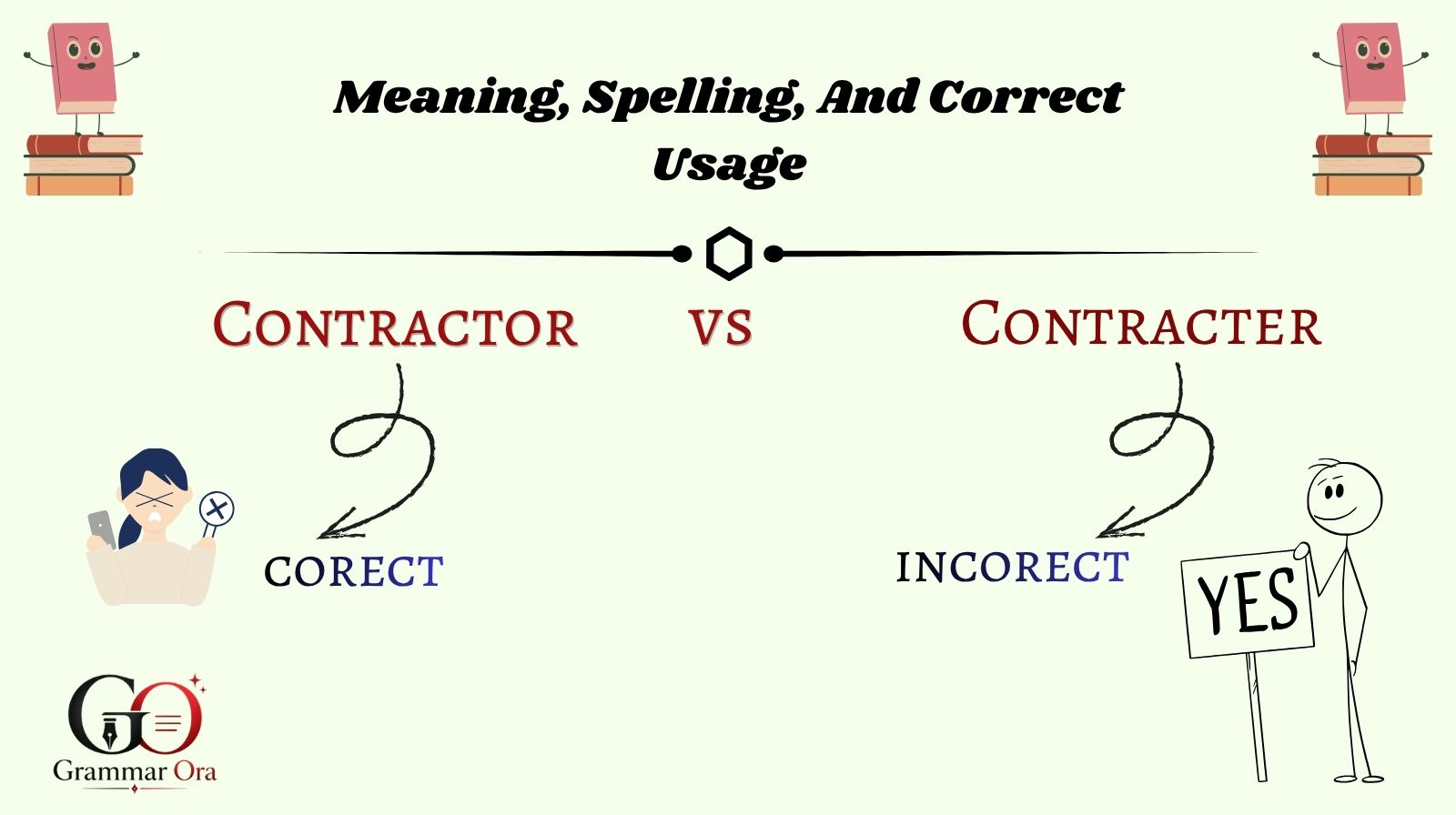
People often get confused between contractor vs contracter because both words sound almost identical when spoken. However, only one of them is actually correct in standard English. This spelling mistake appears frequently in emails, resumes, contracts, business documents, and even online job listings.
If you have ever wondered whether to write contractor or contracter, you are not alone. English spelling can sometimes feel tricky, especially when similar words follow different grammar patterns. The good news is that the rule here is simple once you understand it.
In this guide, you will learn:
- The correct spelling
- The meaning of contractor
- Why “contracter” is incorrect
- Real-world examples
- Grammar rules
- Easy memory tricks
- Common mistakes to avoid
By the end of this article, you will confidently know when and how to use the word correctly in both professional and everyday writing.
What Does Contractor Mean?
A contractor is a person or company hired to perform work or provide services under a contract. Contractors are commonly found in industries like construction, software development, marketing, plumbing, electrical work, and consulting.
Simple Definition of Contractor
A contractor is someone who works independently or is hired temporarily for a specific project or service.
Examples of Contractor in Sentences
- The company hired a contractor to renovate the office.
- Our contractor completed the project ahead of schedule.
- She works as an independent IT contractor.
- The building contractor managed the entire construction site.
The word is widely used in professional environments, legal agreements, and business communication.
Common Types of Contractors
Construction Contractors
These contractors handle building, remodeling, and infrastructure projects.
Examples include:
- Home builders
- Electricians
- Plumbers
- Roofing specialists
Independent Contractors
Independent contractors work for themselves rather than being permanent employees.
Examples include:
- Freelance writers
- Graphic designers
- Software developers
- Consultants
Government Contractors
These are businesses or individuals hired by governments to provide services or products.
Is Contracter a Real Word?
No, contracter is not considered correct in modern English.
Although some people accidentally write “contracter,” dictionaries and grammar authorities recognize contractor as the proper spelling.
Why People Write “Contracter”
The confusion usually happens because many English words ending in verbs use “-er” when referring to a person.
Examples include:
- Teach → Teacher
- Build → Builder
- Paint → Painter
Because of this pattern, people mistakenly assume:
- Contract → Contracter
However, English does not follow one single rule for every word. In this case, the correct noun form is contractor.
Dictionary Confirmation
Major dictionaries such as:
all list contractor as the standard spelling.
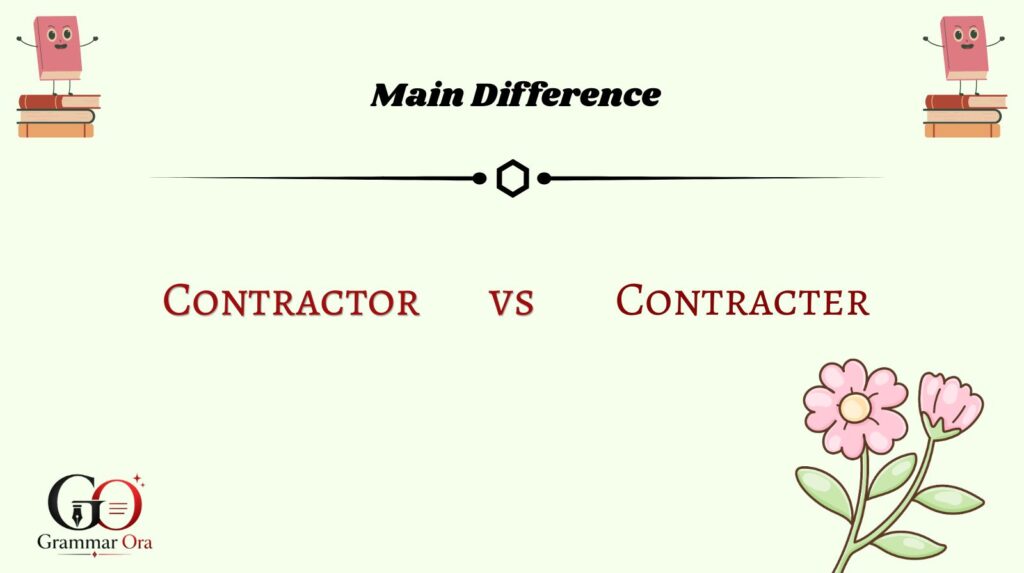
Contractor vs Contracter: Main Difference
| Word | Correct or Incorrect | Meaning |
|---|---|---|
| Contractor | Correct | A person or company hired under a contract |
| Contracter | Incorrect | Misspelling of contractor |
The difference is very simple:
- Contractor = proper English spelling
- Contracter = spelling mistake
Even though the pronunciation is similar, professional writing always requires the word contractor.
Why Contractor Is the Correct Spelling
The word contractor comes from the Latin word contractor, which later entered English through legal and business terminology.
English keeps the “-or” ending in several professional nouns.
Examples of Similar Words Ending in “-or”
| Verb | Correct Noun |
|---|---|
| Act | Actor |
| Edit | Editor |
| Operate | Operator |
| Contract | Contractor |
This explains why contractor uses “-or” instead of “-er.”
Grammar Rule to Remember
A useful trick is this:
Many professional or occupational nouns in English end with “-or.”
For example:
- Doctor
- Professor
- Instructor
- Contractor
So when talking about someone hired under a contract, “contractor” is the correct form.
Common Situations Where People Use Contractor
The word appears in many industries and everyday conversations.
In Construction
Construction is the most common field associated with contractors.
Example:
- The contractor estimated the project cost at $50,000.
In Freelancing
Freelancers are often legally classified as independent contractors.
Example:
- She signed a contract as a freelance contractor.
In Business Agreements
Companies hire contractors for temporary services.
Example:
- The marketing contractor handled the campaign launch.
In Government Projects
Governments regularly outsource work to contractors.
Example:
- Defense contractors received new funding approvals.
Contractor vs Employee: Understanding the Difference
Many people confuse contractors with employees, but they are different legally and financially.
| Feature | Contractor | Employee |
|---|---|---|
| Work Type | Temporary or project-based | Permanent or long-term |
| Taxes | Self-managed | Employer-managed |
| Flexibility | High | Limited |
| Benefits | Usually none | Often included |
| Schedule | Independent | Company-controlled |
Why This Difference Matters
Understanding the distinction is important because it affects:
- Taxes
- Legal responsibilities
- Benefits
- Work expectations
According to the IRS official website, independent contractors control how work is completed, while employees work under company direction.
Real-Life Example: How a Small Business Avoided a Costly Mistake
A small construction company in Texas once published a job advertisement looking for an experienced “construction contracter.” At first, the owner did not think the spelling mattered much. However, the mistake created unexpected problems.
Potential clients noticed the typo on the company website and social media pages. Some visitors questioned the professionalism of the business because spelling errors in official communication can reduce trust. In industries like construction, trust is extremely important because customers are investing large amounts of money into projects.
The business also struggled with online visibility. Since most people search Google using the correct spelling “contractor,” the website failed to rank properly for important local search terms. As a result, the company lost valuable organic traffic.
After updating all content with the correct spelling, the company noticed:
- Improved search rankings
- More website inquiries
- Better customer trust
- Increased professionalism
This example shows why correct spelling matters not only for grammar but also for branding, SEO, and credibility.
Contractor Spelling in American vs British English
Unlike some English words, contractor is spelled the same in both American and British English.
Examples
| American English | British English |
|---|---|
| Contractor | Contractor |
This makes the word easier because there is no regional spelling variation.
Data and Language Trends (2025–2026)
Language and search trend tools show that thousands of users search for spelling-related comparisons every month.
Recent SEO keyword research data from 2025 indicates that grammar and spelling searches continue growing because people increasingly rely on digital communication for work, education, and freelancing.
Interesting Statistics
- Google processes billions of spelling-related searches yearly.
- Freelance and contractor-related job searches increased significantly after remote work expansion.
- LinkedIn and Upwork report continued growth in independent contractor roles through 2026.
- Grammar-related content receives strong engagement because users want quick and trustworthy answers.
According to reports from
clear language and accurate terminology help businesses appear more credible online.
Common Mistakes People Make With Contractor
Spelling mistakes happen often because pronunciation can sound misleading.
Mistake #1: Writing Contracter
❌ Incorrect:
- We hired a contracter for kitchen remodeling.
✅ Correct:
- We hired a contractor for kitchen remodeling.
Mistake #2: Mixing Contractor and Employee
Some people assume contractors and employees are identical roles, but legal definitions differ significantly.
Mistake #3: Incorrect Resume Usage
Typos on resumes or LinkedIn profiles can hurt professionalism.
❌ IT Contracter
✅ IT Contractor
Easy Tricks to Remember Contractor
Remembering the correct spelling becomes easier with simple memory techniques.
Trick #1: Think of “Actor”
Both words end in “-or.”
- Actor
- Contractor
Trick #2: Professional Titles Often Use “-or”
Examples:
- Doctor
- Professor
- Instructor
- Contractor
Trick #3: Visual Memory Method
Picture a worker holding a contract paper.
The word “contractOR” works under a contract.
How to Use Contractor Correctly in Writing
Using the correct spelling is important in:
- Job applications
- Contracts
- Emails
- Websites
- Business proposals
- Academic papers
Professional Writing Example
Correct:
The contractor will complete the renovation within six weeks.
Incorrect:
The contracter will complete the renovation within six weeks.
SEO and Branding Importance
Correct spelling improves:
- Search engine rankings
- Professional credibility
- User trust
- Website readability
Search engines recognize “contractor” as the valid keyword, while “contracter” may appear as a typo.
Contractor Synonyms and Related Terms
Sometimes you can replace contractor with related terms depending on context.
Common Synonyms
| Word | Usage Context |
|---|---|
| Builder | Construction |
| Freelancer | Independent work |
| Consultant | Professional services |
| Vendor | Business supply |
| Subcontractor | Secondary contract work |
Important Note
Although related, these words do not always mean exactly the same thing as contractor.
Contractor in Legal and Business Contexts
The word contractor carries legal significance in many agreements.
Independent Contractor Agreements
These documents define:
- Payment terms
- Work scope
- Deadlines
- Responsibilities
Why Correct Terminology Matters
Incorrect wording in contracts can create confusion or appear unprofessional.
Businesses therefore carefully use the correct legal spelling: contractor.
Best Practices for Avoiding Spelling Errors
Use Spell-Checking Tools
Tools like:
can quickly identify spelling mistakes.
Proofread Important Documents
Always review:
- Contracts
- Emails
- Website content
- Job applications
Read the Word Aloud
Sometimes hearing the sentence helps identify awkward or incorrect spelling.
FAQs
Q1: Is contractor or contracter correct?
A: Contractor is the correct spelling. “Contracter” is a misspelling and should be avoided in professional writing.
Q2: What does contractor mean?
A: A contractor is a person or company hired under a contract to complete specific work or services.
Q3: Why do people spell contractor incorrectly?
A: People often assume the word follows the common “-er” pattern used in words like teacher or builder.
Q4: Is contracter in the dictionary?
A: No major English dictionary recognizes “contracter” as the standard spelling.
Q5: Can contractor refer to freelancers?
A: Yes. Freelancers are often legally classified as independent contractors.
Q6: Is contractor used in British English too?
A: Yes. Both American and British English use the spelling “contractor.”
Q7: Does spelling matter for SEO?
A: Absolutely. Correct spelling improves search rankings, readability, and credibility online.
Conclusion
The confusion between contractor vs contracter is common, but the correct choice is simple once you know the rule.
- Contractor = correct spelling
- Contracter = incorrect spelling
Whether you are writing a business email, updating your resume, creating website content, or signing a legal agreement, using the correct spelling helps maintain professionalism and credibility.
Language accuracy also matters for SEO, branding, and user trust. Even a small spelling mistake can affect how readers and search engines view your content.
So the next time you write the word, remember:
A person working under a contract is always a contractor never a contracter.
👉 Discover more simple and practical grammar guides on Grammar Ora

Muhammad Bilal is an expert blogger in Grammar Guide, dedicated to simplifying English grammar and helping learners write and speak with clarity, confidence, and accuracy.