Have you ever typed “thats” in a text message, email, or social media post and wondered whether it was actually correct? You’re not alone. Many English learners and even native speakers occasionally forget the apostrophe in “that’s.”
While the difference may seem small, using the wrong form can make your writing look less polished and sometimes even change the meaning of a sentence.
In this guide, you’ll learn the difference between that’s vs thats, discover why one is correct and the other usually isn’t, see real-world examples, avoid common mistakes, and gain simple tricks to remember the rule forever.
What Is the Difference Between “That’s” and “Thats”?
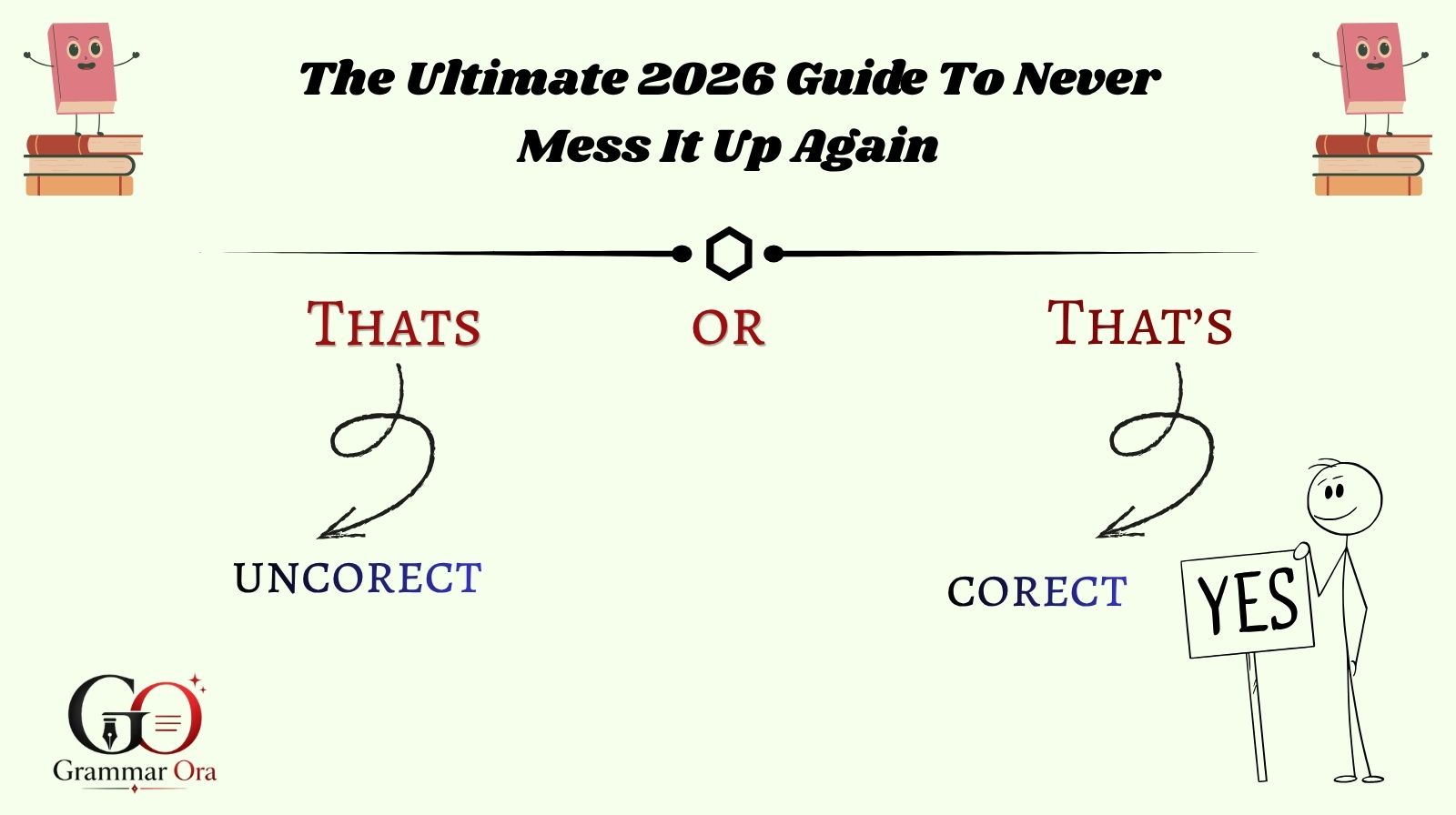
The short answer is simple:
| Word | Correct? | Meaning |
|---|---|---|
| That’s | ✅ Yes | Contraction of “that is” or “that has” |
| Thats | ❌ Usually No | Misspelling in standard English |
The apostrophe in that’s replaces missing letters.
For example:
- That’s a beautiful sunset.
- That’s exactly what I meant.
- That’s been happening for years.
Without the apostrophe, thats is considered incorrect in standard English writing.
Why the Apostrophe Matters
An apostrophe is not just punctuation. It signals that letters have been omitted.
That’s = That + Is
or
That’s = That + Has
Examples:
- That’s my favorite movie.
- That’s been my dream since childhood.
Removing the apostrophe breaks the grammatical structure.
Quick Rule
If you can replace the word with “that is” or “that has,” then that’s is correct.
Why Do People Write “Thats”?
Many people omit apostrophes when:
- Typing quickly on phones
- Posting on social media
- Sending informal messages
- Using autocorrect-disabled devices
However, informal usage does not make it grammatically correct.
Common Situations Where the Mistake Happens
Text Messages
Example:
❌ Thats amazing.
✅ That’s amazing.
Emails
Example:
❌ Thats exactly what I needed.
✅ That’s exactly what I needed.
School Assignments
Example:
❌ Thats why the experiment failed.
✅ That’s why the experiment failed.
Even small grammar mistakes can affect professionalism and credibility.
How to Use “That’s” Correctly
Understanding how that’s functions in a sentence makes correct usage effortless.
When “That’s” Means “That Is”
Examples:
- That’s a great idea.
- That’s the restaurant I told you about.
- That’s where we met.
Expanded versions:
- That is a great idea.
- That is the restaurant I told you about.
- That is where we met.
When “That’s” Means “That Has”
Examples:
- That’s been happening all year.
- That’s already finished.
- That’s become a major issue.
Expanded versions:
- That has been happening all year.
- That has already finished.
- That has become a major issue.
The Apostrophe Test
Ask yourself:
“Can I replace this with that is or that has?”
If yes, use that’s.
Common Mistakes People Make
Even experienced writers occasionally misuse contractions.
Mistake #1: Dropping the Apostrophe
❌ Thats not true.
✅ That’s not true.
Mistake #2: Assuming Informal Usage Is Correct
Social media often ignores punctuation, but formal writing should not.
Mistake #3: Confusing Contractions with Possessives
Many people think apostrophes always show possession.
For example:
- Sarah’s book → possession
- That’s nice → contraction
The apostrophe serves different purposes depending on context.
Real-Life Example: How One Small Apostrophe Changed a Professional Email
A marketing coordinator preparing a proposal for a potential client sent an email explaining a new advertising strategy. Throughout the document, she repeatedly wrote “thats” instead of “that’s.”
Although the proposal itself contained valuable information, the client noticed several grammar mistakes. During a follow-up discussion, the client mentioned that the document felt rushed and lacked attention to detail.
The coordinator later revised the proposal, correcting punctuation and grammar issues. The updated version appeared more professional, easier to read, and more trustworthy.
This example demonstrates an important reality of business communication. Readers often judge credibility based on small details. A missing apostrophe may not completely ruin your message, but repeated errors can create an impression of carelessness.
Whether you’re writing emails, blog posts, reports, or academic papers, proper punctuation helps communicate professionalism and confidence.
That’s vs Thats: Side-by-Side Comparison
| Feature | That’s | Thats |
|---|---|---|
| Standard English | ✅ Yes | ❌ No |
| Uses Apostrophe | ✅ Yes | ❌ No |
| Means “That Is” | ✅ Yes | ❌ No |
| Means “That Has” | ✅ Yes | ❌ No |
| Accepted in Formal Writing | ✅ Yes | ❌ No |
| Appears in Dictionaries | ✅ Yes | ❌ No |
Grammar Statistics and Trends (2025–2026)
According to recent writing and editing trends reported by grammar platforms and educational resources, apostrophe-related mistakes remain among the most common punctuation errors made online.
Key observations include:
- Contraction mistakes consistently rank among the most frequent grammar issues.
- Missing apostrophes are especially common in mobile typing.
- Professional editors frequently identify apostrophe errors during content reviews.
- Educational institutions continue emphasizing contraction accuracy in writing assessments.
As digital communication grows, mastering simple punctuation rules remains essential for clear and professional writing.
Why Grammar Still Matters in 2026
Good grammar helps:
- Improve readability
- Increase credibility
- Strengthen professional communication
- Enhance academic writing
- Build trust with readers
How to Remember the Rule Forever
Use this simple checklist:
✔ The 5-Second Checklist
Before writing that’s, ask:
- Can it mean “that is”?
- Can it mean “that has”?
- Does the sentence still make sense when expanded?
- Is this formal or professional writing?
- Have I included the apostrophe?
If the answer is yes, use that’s.
This quick method prevents almost every mistake.
FAQs
Q1: Is “thats” ever correct?
A: In standard English, no. The correct form is that’s when you mean that is or that has.
Q2: Why does “that’s” need an apostrophe?
A: The apostrophe shows that letters have been omitted from that is or that has.
Q3: Can I use “thats” in text messages?
A: People sometimes do, but it is still considered grammatically incorrect.
Q4: Is “that’s” formal enough for business writing?
A: Yes. Contractions are widely accepted in modern business and professional communication unless a highly formal style is required.
Q5: How do I know whether “that’s” means “that is” or “that has”?
A: Look at the sentence context. Both forms are grammatically correct depending on meaning.
Q6: Do grammar checkers catch this mistake?
A: Most modern grammar tools identify thats and suggest changing it to that’s.
Conclusion
The debate between that’s or thats is actually very simple once you understand the role of the apostrophe. That’s is the correct contraction of that is or that has, while thats is generally considered a spelling mistake in standard English.
Whenever you’re unsure, perform the quick substitution test. If the phrase can become that is or that has, then that’s is the correct choice.
Mastering small grammar details like this improves clarity, professionalism, and confidence in every piece of writing you create. Whether you’re sending an email, publishing a blog post, or posting online, remembering this one rule will help you avoid a very common mistake forever.
👉 Discover more simple and practical grammar guides on Grammar Ora

Muhammad Bilal is an expert blogger in Grammar Guide, dedicated to simplifying English grammar and helping learners write and speak with clarity, confidence, and accuracy.