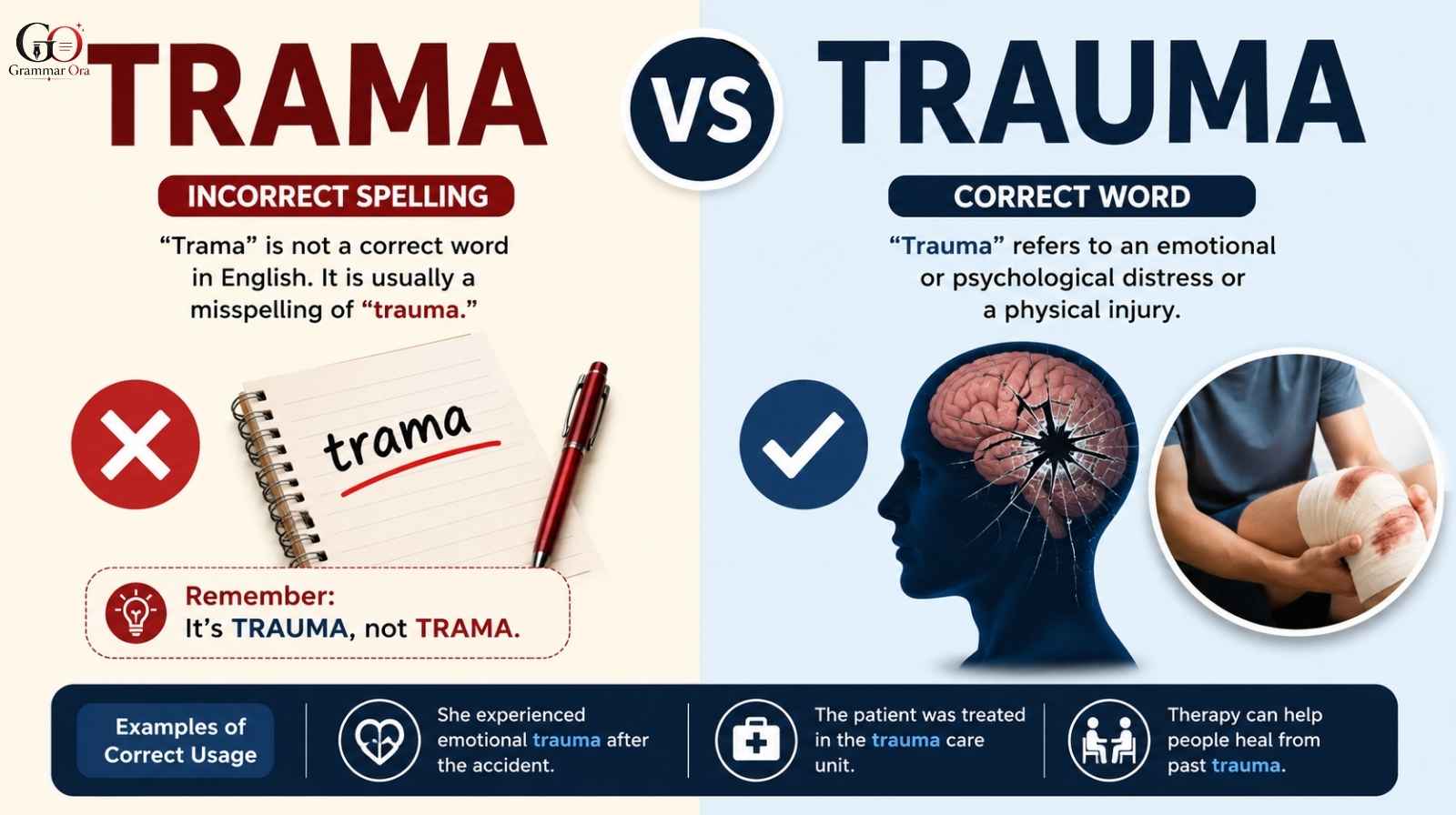
Have you ever typed “trama” and suddenly wondered if it was actually supposed to be “trauma”? You’re not alone. Many people confuse trama vs trauma because the words look similar and are often mistyped while writing quickly.
However, only one of these words is correct in most English contexts. The other is usually a spelling mistake or a completely different word in another language.
In this guide, you’ll learn the real difference between trama and trauma, their meanings, pronunciation, correct usage, examples, and how to avoid making this common mistake again.
What Does “Trauma” Mean?
The word trauma is a real and commonly used English word. It refers to a deeply distressing emotional experience or a serious physical injury.
Emotional Meaning of Trauma
Emotional trauma happens when someone experiences a shocking, painful, or frightening event.
For example:
- Losing a loved one
- Experiencing abuse
- Surviving an accident
- Going through war or violence
Example sentences:
- She experienced emotional trauma after the accident.
- Childhood trauma can affect mental health later in life.
- Many soldiers return home carrying psychological trauma.
Physical Meaning of Trauma
In medicine, trauma can also describe a severe bodily injury.
Examples:
- Head trauma
- Chest trauma
- Blunt force trauma
Doctors and healthcare professionals frequently use this term in hospitals and emergency care.
Trauma in Psychology and Healthcare
According to the American Psychological Association, trauma can affect emotions, memory, relationships, and even physical health. Research from recent mental health studies shows that trauma awareness and therapy demand increased significantly between 2024 and 2026 as more people sought mental health support worldwide.
Is “Trama” a Real Word?
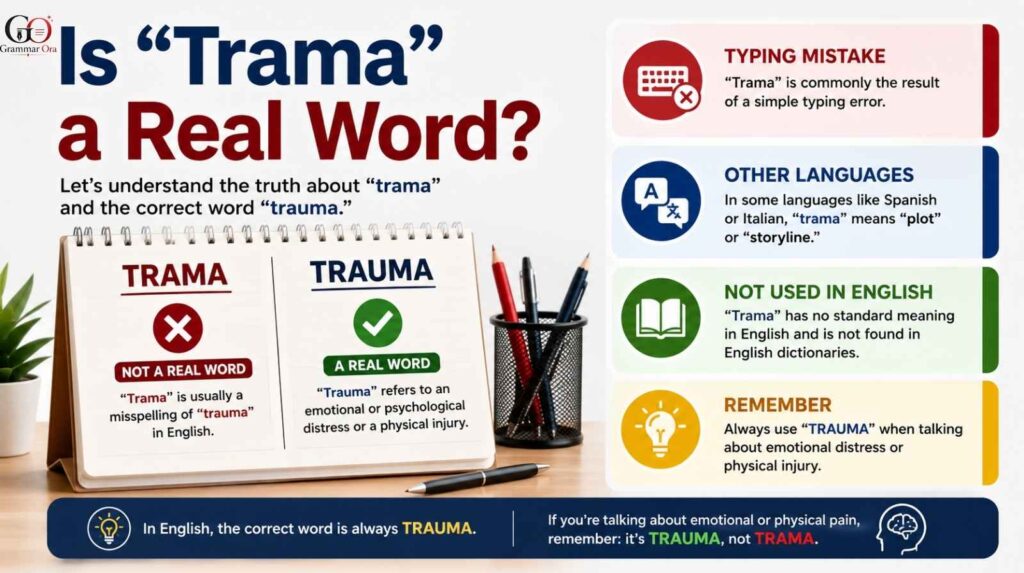
In standard English, trama is usually considered a misspelling of “trauma.”
Many people accidentally leave out the letter “u” while typing quickly. Since both words sound somewhat similar when spoken fast, the confusion is understandable.
When “Trama” May Appear
There are a few situations where you might still see the word “trama”:
1. Typing Mistakes
Most commonly, people simply mean to write “trauma.”
Incorrect:
- He went through severe trama after the incident.
Correct:
- He went through severe trauma after the incident.
2. Other Languages
In some languages, especially Spanish or Italian contexts, “trama” can have different meanings related to plot, weaving, or storyline.
For example, in Spanish:
- “La trama de la película” means “the plot of the movie.”
However, this meaning does not apply in normal English writing.
Trama vs Trauma: Key Differences
Here’s a quick comparison table to make things simple.
| Feature | Trama | Trauma |
|---|---|---|
| Correct English Word? | Usually no | Yes |
| Meaning in English | Typically a typo | Emotional or physical distress |
| Common Usage | Rare in English | Very common |
| Used in Psychology? | No | Yes |
| Used in Medical Contexts? | No | Yes |
| Related to Mental Health? | No | Yes |
Why Do People Confuse Trama and Trauma?
There are several reasons why this spelling confusion happens so often.
Similar Pronunciation
When spoken quickly, “trauma” may sound like “trama,” especially for non-native English speakers.
Fast Typing Errors
The missing “u” is one of the most common keyboard mistakes in English spelling.
Autocorrect Issues
Sometimes phones or browsers fail to correct the typo immediately, which causes people to assume “trama” is acceptable.
Language Influence
People who speak Spanish, Portuguese, or Italian may already recognize “trama” from their own language, leading to confusion in English writing.
Real-Life Example: How a Small Spelling Mistake Changed the Meaning
A freelance writer once shared an experience on a language forum while preparing a mental health blog post for a client. Throughout the article, they repeatedly used the word “trama” instead of “trauma.” Because spell-check did not immediately flag every instance, the mistake went unnoticed until the editor reviewed the content.
The issue became serious because the article discussed PTSD, childhood trauma, and emotional recovery. Readers could easily question the credibility of the information due to the spelling error alone.
After correcting the word, the article performed much better in search results and appeared more trustworthy to readers. This example shows how even a tiny spelling mistake can impact professionalism, SEO performance, readability, and audience trust.
In sensitive topics like psychology or healthcare, accurate spelling matters even more because readers expect reliable and authoritative information.
How to Remember the Correct Spelling of Trauma
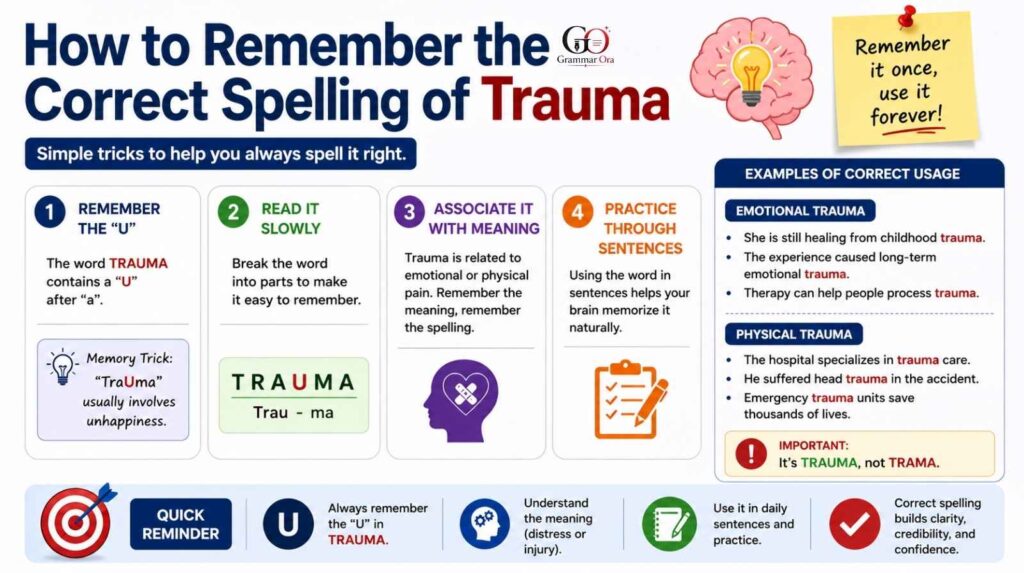
If you often forget whether it’s “trama” or “trauma,” these tricks can help.
Remember the “U”
The word traUma contains a “U” after “a.”
A simple memory trick:
“TraUma usually involves unhappiness.”
Read It Slowly
Break the word into parts:
- Trau-ma
This makes the spelling easier to remember.
Practice Through Sentences
Using the word in real sentences helps your brain memorize it naturally.
Examples:
- Therapy helped him heal from emotional trauma.
- The patient suffered severe head trauma.
Trauma in Modern Conversations and Media
The word “trauma” has become increasingly common online, especially in discussions about mental health, therapy, stress, and emotional well-being.
2025–2026 Mental Health Trends
Recent reports from the World Health Organization and National Institute of Mental Health show growing public awareness around mental health conditions connected to trauma.
Some important trends include:
- More workplaces now offer trauma-informed support
- Therapy-related searches increased globally
- Social media discussions about emotional trauma continue to rise
- Schools increasingly provide mental health resources for students
Because the term appears so frequently online, spelling it correctly is more important than ever for writers, students, bloggers, and professionals.
Common Sentences Using “Trauma”
Here are some natural examples of the correct word in everyday English.
Emotional Trauma Examples
- She is still healing from childhood trauma.
- The experience caused long-term emotional trauma.
- Therapy can help people process trauma.
Medical Trauma Examples
- The hospital specializes in trauma care.
- He suffered blunt trauma during the accident.
- Emergency trauma units save thousands of lives every year.
FAQs
Q.Is “trama” ever correct in English?
A: Usually no. In most English writing, “trama” is simply a misspelling of “trauma.”
Q.What does trauma mean?
A: Trauma refers to severe emotional distress or physical injury caused by a painful or shocking event.
Q.Why do people type “trama” instead of “trauma”?
A: People often make this mistake because of fast typing, pronunciation confusion, or influence from other languages.
Q.Is trauma a medical term?
A: Yes. Doctors use “trauma” to describe serious injuries and emergency conditions.
Q.Can trauma affect mental health?
A: Yes. Emotional trauma can lead to anxiety, depression, PTSD, and other psychological challenges.
Q.How do you pronounce trauma?
A: Trauma is pronounced:
TRAW-muh
Q.Is trauma only emotional?
A: No. Trauma can be emotional, psychological, or physical.
Conclusion
When comparing trama vs trauma, the correct English word is almost always trauma. It refers to emotional suffering, psychological distress, or physical injury, while “trama” is typically just a spelling mistake in English writing.
Understanding the difference helps improve your grammar, writing accuracy, professionalism, and communication. Whether you’re writing an essay, blog post, medical content, or social media caption, using the correct spelling matters.
The next time you hesitate between “trama” and “trauma,” remember this simple rule:
If you’re talking about emotional or physical distress, the correct word is always trauma
👉 Discover more simple and practical grammar guides on Grammar Ora

Muhammad Bilal is an expert blogger in Grammar Guide, dedicated to simplifying English grammar and helping learners write and speak with clarity, confidence, and accuracy.