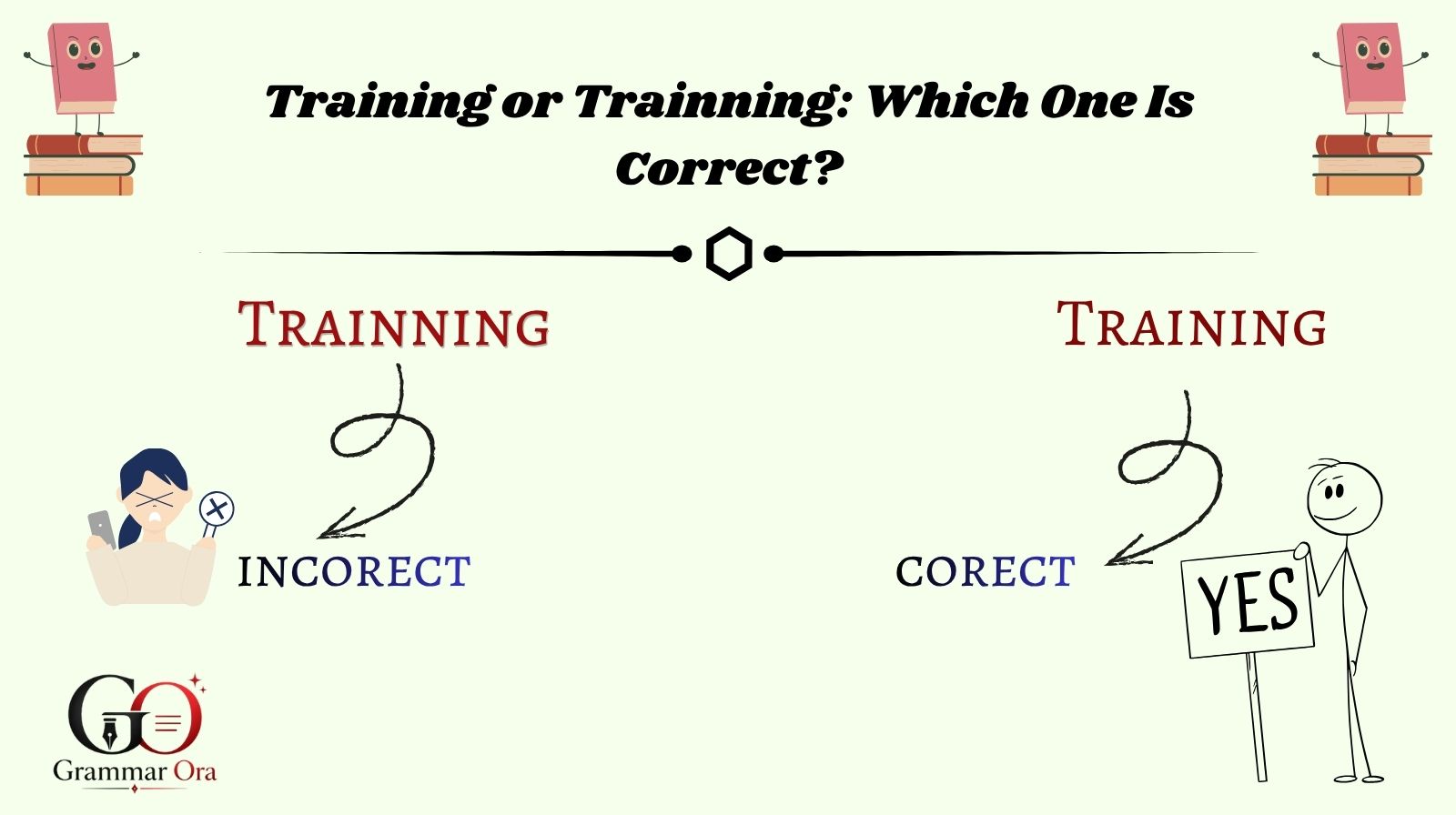
Have you ever typed “trainning” and suddenly wondered if something looked wrong? You are not alone. Many English learners, students, bloggers, and even professionals get confused between training and trainning because English spelling rules can sometimes feel inconsistent.
The good news is that the answer is actually very simple.
Training is the correct spelling, while trainning is a misspelling and is not accepted in standard English dictionaries. However, understanding why the mistake happens can help you avoid it forever.
In this guide, you will learn the correct spelling, grammar rule, pronunciation, examples, common mistakes, memory tricks, and real-world usage of the word “training.” By the end, you will confidently know when and how to use it correctly in writing and conversation.
What Does “Training” Mean?
The word training refers to the process of learning skills, gaining knowledge, or improving abilities through practice, instruction, or experience.
It is commonly used in education, sports, workplaces, fitness, and professional development.
Examples of “Training” in Sentences
- She completed her employee training last week.
- The football team started intense training before the tournament.
- Online training programs are becoming more popular.
- Doctors require years of medical training.
- He attended leadership training to improve management skills.
In all these examples, training is the only correct spelling.
Is “Trainning” a Real Word?
No, trainning is not a real English word.
It is simply a spelling mistake caused by confusion about consonant doubling rules in English grammar.
Why Do People Write “Trainning”?
Many people assume the word should contain a double “n” because some English words double the final consonant before adding “-ing.”
For example:
- Run → Running
- Swim → Swimming
- Sit → Sitting
Because of these examples, learners sometimes mistakenly write:
- Train → Trainning ❌
However, English spelling rules do not work the same way for every word.
The Correct Form
✔ Train → Training
❌ Train → Trainning
Why “Training” Is Correct
The correct spelling follows a standard English grammar rule.
When a verb ends with:
- Two vowels before the final consonant
OR - A vowel combination such as “ai”
the final consonant is usually not doubled before adding “-ing.”
The word train contains the vowel combination “ai,” so the “n” stays single.
Grammar Rule Explained
\text{train} + \text{ing} = \text{training}
Similar Examples
| Base Word | Correct Form | Incorrect Form |
|---|---|---|
| Train | Training | Trainning |
| Rain | Raining | Rainning |
| Clean | Cleaning | Cleanning |
| Speak | Speaking | Speakking |
| Read | Reading | Readding |
These examples show that consonants are not always doubled when adding “-ing.”
Training vs Trainning: Key Differences
Here is a quick comparison to remove confusion completely.
| Word | Correct or Incorrect | Meaning |
|---|---|---|
| Training | ✔ Correct | Learning or practice process |
| Trainning | ❌ Incorrect | Misspelling of training |
Quick Tip to Remember
If the original word contains a vowel pair like:
- ai
- ea
- oa
you usually do not double the final consonant before adding “-ing.”
Therefore:
- Train → Training ✔
- Rain → Raining ✔
Common Situations Where “Training” Is Used
The word “training” is extremely common in daily English. Let’s look at its usage in different contexts.
Workplace Training
Companies provide training programs to improve employee performance and productivity.
Examples:
- New staff members must complete safety training.
- The company offers digital marketing training.
Fitness and Sports Training
Athletes and fitness enthusiasts often use the word while discussing physical preparation.
Examples:
- Marathon training requires discipline.
- Strength training helps build muscle.
Educational Training
Teachers, doctors, engineers, and other professionals go through specialized training.
Examples:
- Teacher training programs are improving worldwide.
- Medical training can take several years.
Online Skills Training
Digital learning platforms have made online training more accessible than ever.
Examples:
- Many students prefer remote training courses.
- AI training tools are changing education.
Real-Life Example: How a Small Spelling Mistake Hurt a Job Application
In 2025, a hiring manager shared an interesting recruitment experience on a professional career forum. A candidate applied for a customer support position with strong qualifications and excellent experience. However, the resume repeatedly used the word “trainning” instead of “training.”
At first glance, the mistake seemed small. However, because the spelling appeared multiple times in important sections like “Professional Trainning” and “Staff Trainning Experience,” it created an unprofessional impression.
The hiring manager explained that spelling accuracy matters because it reflects attention to detail, communication skills, and professionalism. Even though the applicant had relevant experience, the repeated error weakened the credibility of the resume.
After receiving feedback, the candidate corrected the spelling and updated the resume. Within weeks, the revised application received positive responses from employers.
This example shows that small grammar or spelling mistakes can influence real-world opportunities, especially in professional writing. Using the correct spelling “training” helps your communication appear polished, accurate, and trustworthy.
Data and Language Trends (2025–2026)
According to recent language trend reports and search behavior data, spelling-related searches continue to grow rapidly because more people are writing online content, emails, resumes, and social media posts.
Research from Google Trends shows that thousands of users search spelling comparison queries such as:
- “training or trainning”
- “correct spelling of training”
- “is trainning correct”
Language learning platforms have also reported increased searches for commonly confused English words during 2025 and 2026.
Additionally, educational experts from Grammarly emphasize that spelling accuracy improves readability, professionalism, and communication effectiveness in both academic and workplace writing.
According to content writing studies published by HubSpot, clear and error-free writing increases audience trust and engagement significantly, especially in professional communication and online publishing.
These trends show why understanding correct spelling matters more than ever in the digital world.
Common Mistakes People Make With “Training”
Even though the word is simple, people still make several common errors.
Writing “Trainning”
This is the most common mistake.
❌ I completed my trainning yesterday.
✔ I completed my training yesterday.
Confusing Noun and Verb Forms
Some learners confuse:
- Train (verb)
- Training (noun)
Examples:
- I train every morning. ✔
- My training starts tomorrow. ✔
Overthinking Consonant Doubling Rules
English spelling rules can be tricky, but memorizing patterns helps reduce mistakes.
How to Remember the Correct Spelling of Training
Memory tricks can make spelling easier.
Think of the Base Word
The original word is:
- Train
Simply add “-ing”:
- Training
No extra “n” is needed.
Use the “Rain” Trick
Compare it with:
- Rain → Raining
Since “rain” does not become “rainning,” the same rule applies to “training.”
Read It Out Loud
Pronunciation can help:
- Training = train + ing
You do not hear an extra “n” sound.
Training in Modern Digital Communication
Today, the word “training” appears everywhere online.
You will often see it in:
- Online courses
- Corporate programs
- Fitness apps
- Educational websites
- AI learning systems
- Employee onboarding materials
Because the word is widely used in professional environments, spelling it correctly is important for credibility.
Examples From Daily Life
- AI training models are improving rapidly.
- Cybersecurity training is now required in many companies.
- Students benefit from interactive training platforms.
- Remote training sessions became more common after 2020.
SEO and Content Writing Importance of Correct Spelling
Correct spelling is not only important for grammar but also for SEO and user trust.
Search engines like Google prioritize content that appears reliable and professionally written. Frequent spelling mistakes can reduce readability and user confidence.
Why Correct Spelling Matters in SEO
Better User Experience
Readers trust content that looks polished and accurate.
Improved Search Visibility
Correctly spelled keywords help search engines understand content more effectively.
Higher Engagement
People are more likely to stay on pages with clear and professional writing.
For example, a blog targeting the keyword:
- “training programs”
should always use the correct spelling consistently.
FAQs
Q1: Is training or trainning correct?
A: Training is correct. “Trainning” is a spelling mistake and is not accepted in standard English.
Q2: Why is there only one “n” in training?
A: The word “train” contains the vowel combination “ai,” so the final consonant is not doubled before adding “-ing.”
Q3: Is trainning in the dictionary?
A: No. Major dictionaries do not recognize “trainning” as a correct word.
Q4: What does training mean?
A: Training refers to learning skills, improving abilities, or gaining knowledge through practice or instruction.
Q5: How can I remember the correct spelling?
A: Think of similar words like:
- Rain → Raining
- Train → Training
Neither word doubles the final “n.”
Q6: Is training a noun or verb?
A: Training” is usually used as a noun, while “train” is the verb.
Example:
- I train every day.
- My training begins tomorrow.
Q7: Can spelling mistakes affect professional writing?
A: Yes. Spelling mistakes can reduce credibility in resumes, emails, academic writing, and business communication.
Conclusion
If you have ever wondered whether to use training or trainning, the answer is simple: training is the correct spelling.
The confusion happens because English sometimes doubles consonants before adding “-ing.” However, since the word “train” contains the vowel pair “ai,” the final “n” stays single.
Remember this easy rule:
- Train → Training ✔
- Rain → Raining ✔
Using the correct spelling improves your writing, professionalism, SEO quality, and communication clarity. Whether you are writing emails, resumes, blog posts, or school assignments, using “training” correctly will help your content appear more polished and trustworthy.
Next time you type the word, you will know exactly which spelling to choose confidently.
👉 Discover more simple and practical grammar guides on Grammar Ora

Muhammad Bilal is an expert blogger in Grammar Guide, dedicated to simplifying English grammar and helping learners write and speak with clarity, confidence, and accuracy.