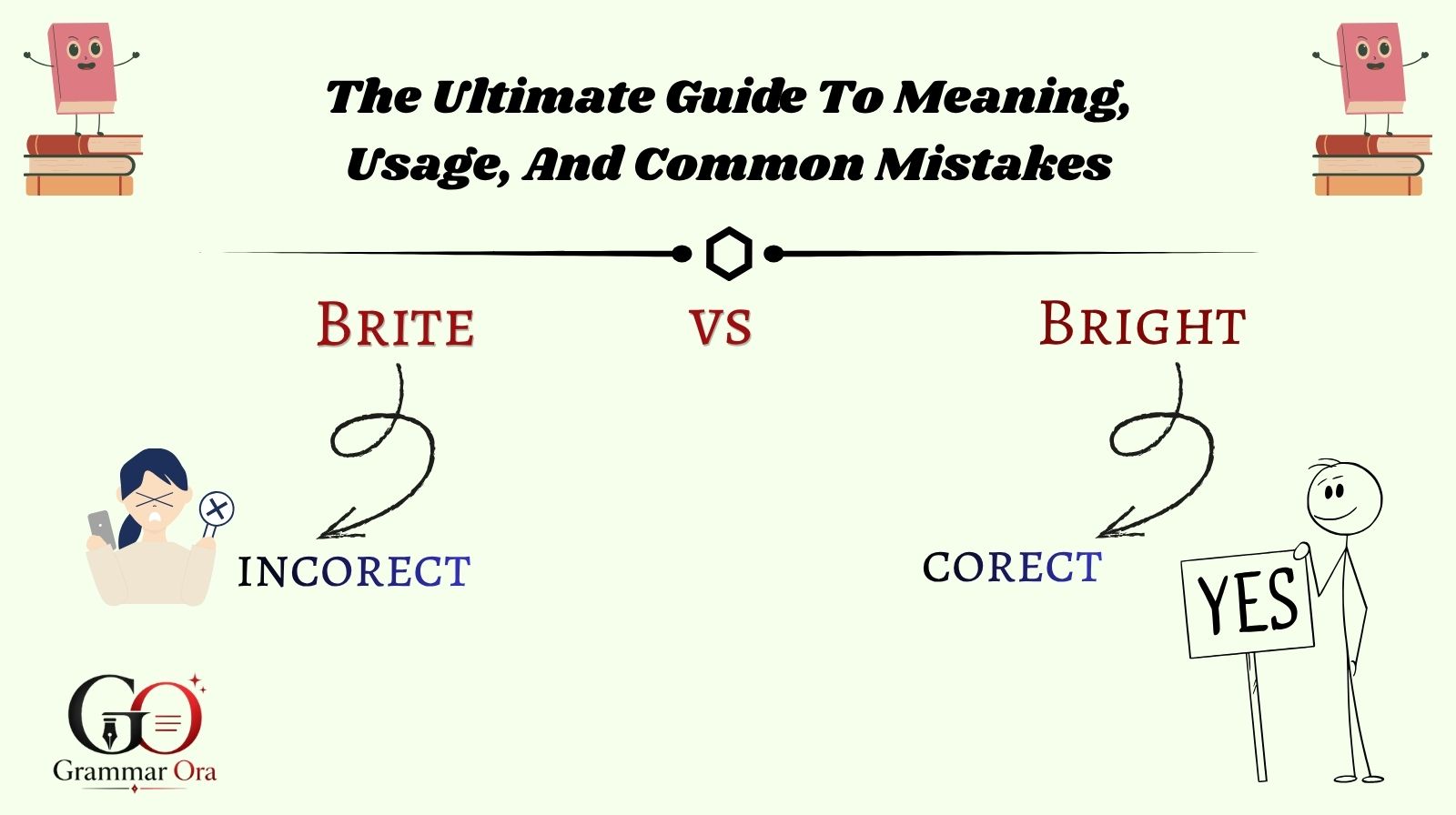
Have you ever seen the word “brite” and wondered whether it is simply a misspelling of “bright”? You’re not alone. Many English learners and native speakers alike become confused when encountering these two similar-looking words.
While “bright” is a standard English word with several meanings, “brite” has a much more limited usage. Understanding the difference can help you write more accurately and avoid common spelling mistakes.
In this guide, you’ll learn the meaning of both words, when to use them, common errors to avoid, and practical examples that make the distinction easy to remember.
Brite vs. Bright: Quick Answer
| Word | Correct Standard English? | Meaning |
|---|---|---|
| Bright | Yes | Giving off light, intelligent, cheerful, vivid |
| Brite | Usually No | A brand name, product name, or alternative spelling in specific contexts |
Key Takeaway
If you’re writing regular English, bright is almost always the correct choice.
What Does Bright Mean?
The word bright is a common English adjective used in several ways.
Bright as Light
When something produces or reflects a lot of light, it is described as bright.
Examples:
- The sun is very bright today.
- She turned on a bright lamp.
- The stars looked bright in the night sky.
Bright as Intelligent
Bright can also describe someone who is smart or quick to learn.
Examples:
- Sarah is a bright student.
- He has a bright future ahead of him.
- The company hired several bright graduates.
Bright as Cheerful
Bright may refer to a positive mood or pleasant atmosphere.
Examples:
- She gave me a bright smile.
- The room felt bright and welcoming.
- We enjoyed a bright morning.
What Does Brite Mean?
Unlike bright, brite is generally not considered a standard English word.
Brand Names and Commercial Use
Many businesses use “brite” in company names, products, and trademarks because it sounds like “bright.”
Examples include:
- Cleaning products
- Technology brands
- Lighting companies
- Marketing names
Alternative Spellings
Sometimes writers intentionally use “brite” for creative branding.
Examples:
- ColorBrite
- ShineBrite
- BrightBrite Solutions
In these cases, “brite” is not replacing the standard dictionary word. It is simply part of a brand identity.
Why People Confuse Brite and Bright
Several factors contribute to the confusion.
Similar Pronunciation
Both words are pronounced exactly the same.
Bright → /braɪt/
Brite → /braɪt/
Since they sound identical, many writers mistakenly assume both spellings are acceptable.
Autocorrect and Informal Writing
Social media, texting, and online branding often expose people to nonstandard spellings.
As a result, some users begin writing “brite” when they actually mean “bright.”
Brand Influence
Popular product names containing “brite” can make the spelling appear correct in everyday writing.
However, professional writing still requires the standard form: bright.
Common Mistakes and How to Avoid Them
Mistake #1: Using Brite in Academic Writing
❌ The student has a brite future.
✅ The student has a bright future.
Mistake #2: Using Brite in Business Emails
❌ We need a brite marketing strategy.
✅ We need a bright marketing strategy.
Mistake #3: Using Brite in School Assignments
❌ The room was brite and colorful.
✅ The room was bright and colorful.
Simple Rule
If you’re describing light, intelligence, color, positivity, or appearance, choose bright.
Real-Life Example: How a Small Spelling Error Affected Website Traffic
A content writer created a blog article about interior lighting and repeatedly used the word “brite” instead of “bright.”
Initially, the writer believed both spellings were acceptable because they sounded identical. However, after publication, the article struggled to rank in search engines. Readers also left comments pointing out the spelling issue.
After conducting keyword research, the writer discovered that thousands of people searched for “bright lighting,” while almost nobody searched for “brite lighting” unless they were looking for a specific brand.
The article was updated with the correct spelling throughout the content, headings, and metadata. Within a few months, rankings improved significantly because the page better matched user search intent.
This example demonstrates why understanding the difference between brite and bright matters not only for grammar but also for SEO performance and reader trust.
Language Data and Usage Trends (2025–2026)
Recent language and search trend analysis shows that:
- “Bright” continues to be the dominant and accepted English spelling.
- Educational dictionaries recognize “bright” as the standard form.
- Most searches involving light, intelligence, and positivity use “bright.”
- “Brite” appears primarily in branded searches and company names.
These trends confirm that writers should use “bright” in nearly all general writing situations.
Brite vs. Bright Comparison Checklist
Before choosing a spelling, ask yourself:
Use Bright If:
- You’re describing light.
- You’re describing intelligence.
- You’re describing cheerful behavior.
- You’re writing essays.
- You’re creating professional content.
- You’re writing blog posts.
Use Brite If:
- It’s part of a company name.
- It’s a registered trademark.
- It’s an intentional brand spelling.
FAQs
Q1: Is brite a real word?
A: Not in standard English usage. It is mainly found in brand names and trademarks.
Q2: Which spelling is correct: brite or bright?
A: For normal English writing, bright is the correct spelling.
Q3: Why do some companies use brite?
A: Companies often use creative spellings to make brand names unique and memorable.
Q4: Can I use brite in school assignments?
A: No. Academic writing should use the standard spelling: bright.
Q5: Are brite and bright pronounced differently?
A: No. Both words are pronounced the same way.
Q6: Is bright an adjective?
A: Yes. Bright is an adjective used to describe light, intelligence, vivid colors, and cheerful attitudes.
Authoritative References
Conclusion
Understanding the difference between brite vs. bright is simpler than it first appears. Bright is the standard English word used to describe light, intelligence, vivid colors, and positivity. Brite, on the other hand, is typically reserved for brand names and specialized commercial uses.
Whenever you’re writing emails, blog posts, academic papers, or professional content, choosing bright will help ensure accuracy, credibility, and clarity. The next time you’re unsure, remember this simple rule: if it’s regular English, the correct spelling is almost always bright.
👉 Discover more simple and practical grammar guides on Grammar Ora

Muhammad Bilal is an expert blogger in Grammar Guide, dedicated to simplifying English grammar and helping learners write and speak with clarity, confidence, and accuracy.


