Have you ever paused while writing and wondered whether it should be receive or recieve? You’re not alone. This is one of the most common spelling mistakes in English, even among native speakers.
The confusion happens because the words “ie” and “ei” appear in many English words, often following different patterns. As a result, many people accidentally write recieve when they actually mean receive.
The good news is that the answer is simple. Once you understand the spelling rule and see a few practical examples, you’ll rarely make this mistake again.
In this guide, you’ll learn the correct spelling, why people confuse the two forms, easy memory tricks, real-world examples, common mistakes to avoid, and practical tips for using the word correctly in everyday writing.
What Is the Correct Spelling: Receive or Recieve?
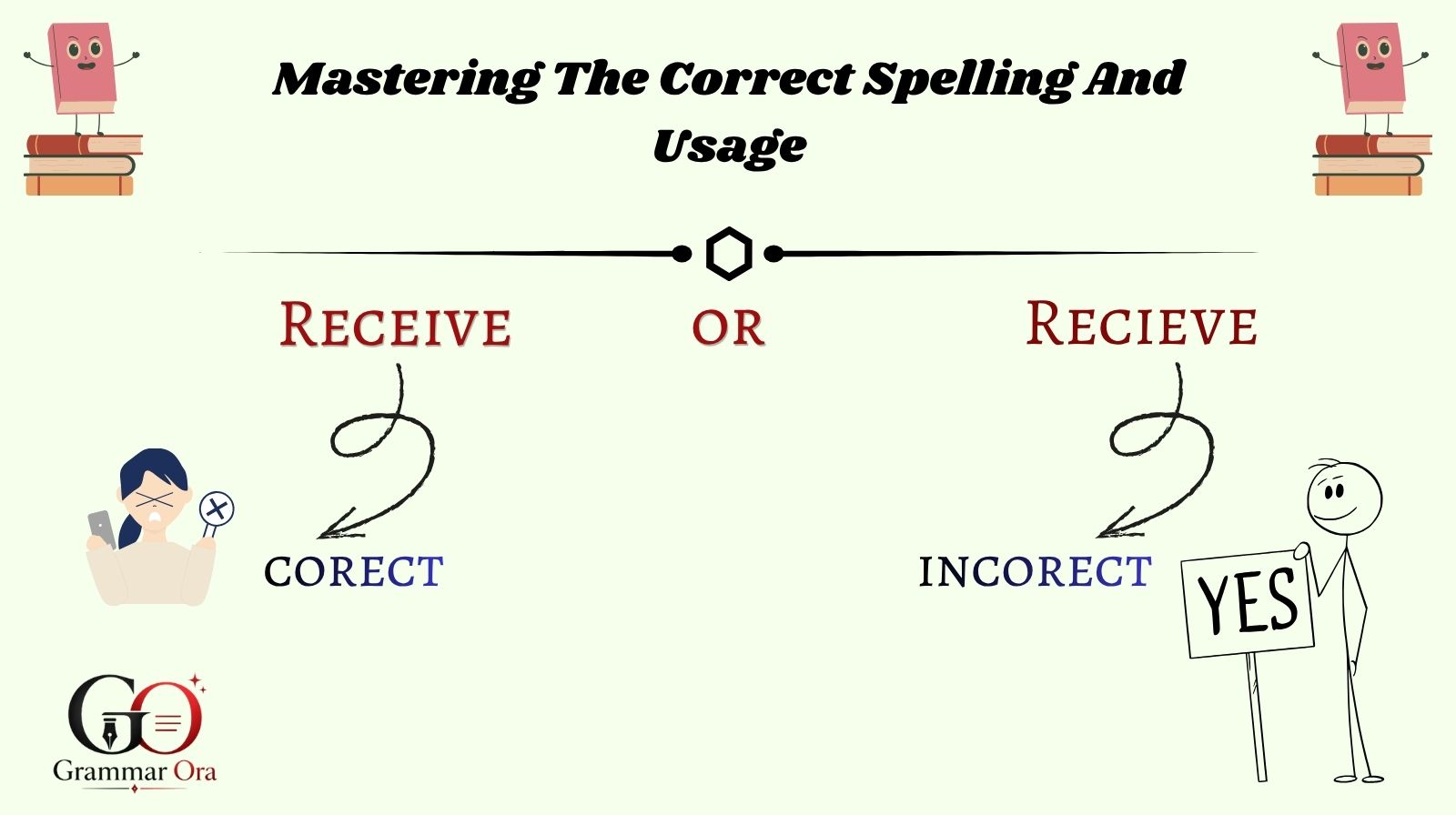
The correct spelling is receive.
❌ Recieve
✅ Receive
Receive is a verb that means to get, accept, acquire, or be given something.
Quick Answer
If you’re wondering which spelling is correct, remember this:
Receive is always correct. Recieve is always a spelling mistake.
Examples of Correct Usage
- I received your email this morning.
- Did you receive the package yesterday?
- Students receive certificates after completing the course.
- We hope to receive feedback soon.
- She was happy to receive the award.
Why Is “Recieve” Incorrect?
The spelling recieve breaks a common English spelling pattern. While many people accidentally reverse the letters, dictionaries and grammar authorities recognize only receive as the correct spelling.
Whether you’re writing an email, essay, report, blog post, or social media update, always use receive.
Understanding the Famous “I Before E Except After C” Rule
One reason the spelling of receive confuses people is the well-known English spelling rule:
“I before E except after C.”
How the Rule Applies to Receive
In the word receive, the letters come after the letter C.
Therefore:
- C + EI = Receive ✅
- C + IE = Recieve ❌
This follows the traditional spelling guideline perfectly.
Other Words That Follow the Same Pattern
Many English words use EI after C.
Examples include:
| Correct Word | Meaning |
|---|---|
| Receive | To get something |
| Deceive | To mislead |
| Conceive | To imagine or become pregnant |
| Perceive | To notice or understand |
| Ceiling | Upper interior surface of a room |
These words all follow the same spelling pattern.
Exceptions to the Rule
English is famous for exceptions.
Examples include:
- Weird
- Their
- Science
- Efficient
This is why the rule isn’t perfect. However, for receive, the rule works exactly as expected.
Why Do So Many People Misspell Receive?
Spelling errors often occur because English pronunciation doesn’t always match spelling.
The Pronunciation Sounds Similar
When spoken aloud, the words receive and recieve sound identical.
Because pronunciation offers no clue, writers often rely on memory, which can lead to mistakes.
The Brain Reverses Letter Order
Research in language processing shows that people frequently swap neighboring letters when writing quickly.
This explains why:
- receive → recieve
- believe → beleive
- friend → freind
These are among the most common spelling errors in English.
Typing Speed Increases Mistakes
Fast typing can also contribute to errors.
For example:
- Writing emails quickly
- Completing assignments under pressure
- Sending instant messages
- Creating content rapidly
In these situations, writers may accidentally type recieve without noticing.
Spell Check Creates False Confidence
Modern spelling tools catch many mistakes, but people don’t always pay attention to corrections. Sometimes the error slips through if proofreading is skipped.
Real-Life Example: How a Simple Spelling Mistake Affected Professional Communication
Consider a freelance marketing consultant who regularly communicated with international clients.
One day, she sent a proposal email containing the sentence:
“Please confirm once you recieve the attached document.”
The client noticed the spelling error immediately.
Although the mistake did not affect the project’s outcome, it created a less professional impression. Later, the consultant reviewed her emails and discovered she had misspelled receive multiple times across different communications.
She decided to create a personal proofreading checklist that included commonly confused words such as:
- Receive
- Separate
- Accommodation
- Definitely
- Necessary
Within a few months, her writing accuracy improved significantly.
This example demonstrates an important lesson: small spelling mistakes may seem minor, but they can influence how readers perceive professionalism, attention to detail, and credibility.
Whether you’re a student, business owner, job seeker, or content creator, using correct spelling helps establish trust with your audience.
Receive Meaning and Usage in Everyday English
The verb receive has several meanings depending on context.
To Get Something
This is the most common meaning.
Examples:
- I received a gift.
- We received the payment.
- They received the invitation.
To Accept Something
Sometimes receive means accepting something offered.
Examples:
- The hospital received additional funding.
- The organization received donations.
To Experience Something
Receive can also refer to experiencing treatment, reactions, or consequences.
Examples:
- He received praise from his manager.
- The movie received positive reviews.
- The athlete received medical treatment.
To Welcome Someone
In formal situations, receive can mean greeting or welcoming.
Examples:
- The ambassador received foreign guests.
- The president received delegates at the ceremony.
Common Expressions That Use Receive
English speakers frequently use receive in everyday communication.
Receive an Email
- I received your message yesterday.
- Have you received my attachment?
Receive a Package
- She received the parcel this morning.
- We haven’t received the shipment yet.
Receive Feedback
- Employees receive performance feedback annually.
- Writers receive comments from editors.
Receive Recognition
- The scientist received international recognition.
- He received an award for excellence.
Receive Support
- Families received emergency assistance.
- Students received academic support.
Using these common phrases correctly helps improve both written and spoken English.
Receive vs Recieve Comparison Table
| Feature | Receive | Recieve |
|---|---|---|
| Correct English spelling | ✅ Yes | ❌ No |
| Found in dictionaries | ✅ Yes | ❌ No |
| Acceptable in formal writing | ✅ Yes | ❌ No |
| Used in academic writing | ✅ Yes | ❌ No |
| Used in business communication | ✅ Yes | ❌ No |
| Considered a spelling mistake | ❌ No | ✅ Yes |
The table makes the answer clear: receive is the only correct form.
Easy Tricks to Remember the Correct Spelling
Remembering the correct spelling doesn’t have to be difficult.
Trick 1: Think of the Letter C
Receive follows:
C + EI
Whenever you see the letter C, remember that EI often follows.
Trick 2: Use the Classic Rhyme
“I before E, except after C.”
Receive fits this rule perfectly.
Trick 3: Visual Memory
Picture the word as:
rec + eive
Seeing the correct pattern repeatedly helps your brain store it accurately.
Trick 4: Practice Through Repetition
Write the word several times:
- receive
- receive
- receive
- receive
Repeated exposure strengthens spelling memory.
Data and Statistics: How Common Is the Receive vs Recieve Mistake?
Spelling confusion around receive remains widespread in digital communication.
According to educational language platforms and spelling research published in recent years:
- “Receive” consistently ranks among the most frequently misspelled English words.
- Letter-reversal errors are especially common among students and second-language learners.
- Search engines process thousands of monthly searches related to “receive or recieve.”
- Grammar-checking tools identify receive-related spelling errors as one of the most common corrections in business writing.
Recent educational reports from language-learning organizations between 2025 and 2026 indicate that spelling-related mistakes continue to be among the leading causes of writing corrections in workplace communication.
This demonstrates that even experienced writers occasionally struggle with this word.
Authoritative References for Correct Usage
For reliable spelling guidance, consult trusted language authorities:
- Google Dictionary
- Merriam-Webster Dictionary
- Cambridge Dictionary
All major dictionaries list receive as the correct spelling and identify recieve as an error.
These references are widely trusted by educators, editors, writers, and academic institutions.
FAQs
Q1: Is receive or recieve correct?
A: Receive is correct. Recieve is an incorrect spelling.
Q2: Why do people spell receive as recieve?
A: People often reverse the letters because English spelling patterns can be confusing and pronunciation doesn’t clearly indicate the correct order.
Q3: Is recieve a real word?
A: No. Recieve is not recognized as a standard English word.
Q4: How do I remember the spelling of receive?
A: Use the rule:
“I before E, except after C.”
Since receive contains the letter C, it uses EI.
Q5: Can I use recieve in informal writing?
A: No. Even in informal writing, recieve is considered a spelling mistake.
Q6: What part of speech is receive?
A: Receive is a verb that means to get, accept, experience, or obtain something.
Q7: What is the past tense of receive?
A: The past tense is received.
Example:
- I received your message yesterday.
Conclusion
When comparing receive vs recieve, the answer is straightforward: receive is the correct spelling, while recieve is always incorrect.
Although many writers accidentally reverse the letters, remembering the rule “I before E except after C” makes the correct spelling much easier to recall. Whether you’re writing emails, academic papers, professional reports, or social media posts, using receive correctly improves clarity and professionalism.
The next time you hesitate between receive and recieve, choose receive with confidence and continue building stronger, more accurate English writing skills.
👉 Discover more simple and practical grammar guides on Grammar Ora

Muhammad Bilal is an expert blogger in Grammar Guide, dedicated to simplifying English grammar and helping learners write and speak with clarity, confidence, and accuracy.