Confusion words in English can be tricky, and “tomorrow vs tommorrow” is one of the most common spelling mistakes people make every day. At first glance, both look almost the same, but only one is correct in real English writing. This small error often happens while typing fast, writing assignments, or creating online content, and it can easily affect how professional your work looks.
In this article, we will clearly explain the correct spelling, why people make this mistake, and simple ways to remember it forever. By the end, you will feel confident using the word “tomorrow” correctly in your writing, whether it’s for school, emails, or any professional work.
What is the Correct Spelling Tomorrow vs Tommorrow
The Only Correct Form
The correct spelling is:
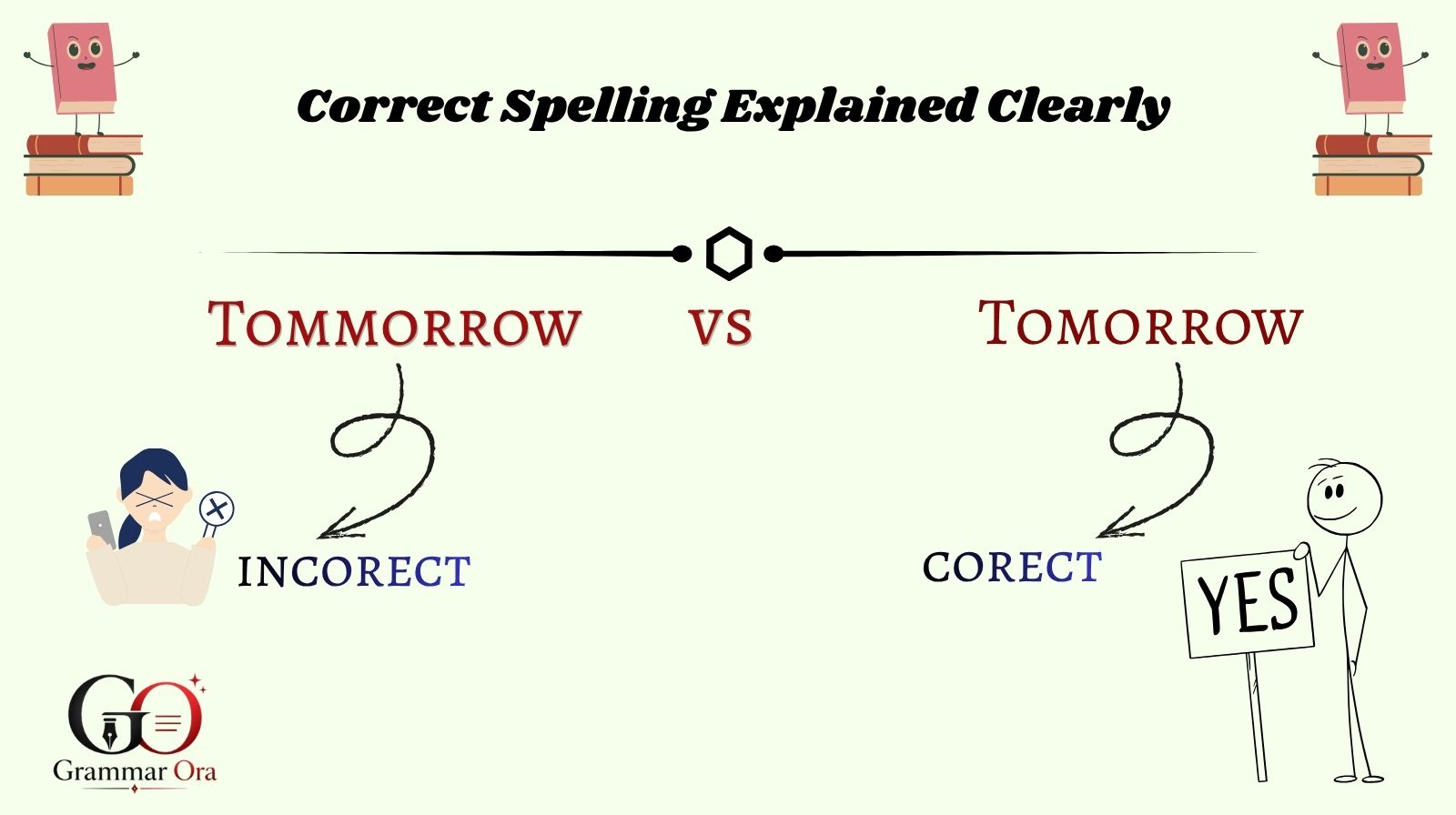
👉 Tomorrow
The word “tommorrow” with double “m” is incorrect in English and should always be avoided in academic, professional, and formal writing.
Why “Tommorrow” is Incorrect
The incorrect version happens due to:
- Overthinking pronunciation
- Visual duplication of consonants
- Typing errors
- Influence of similar English words with double letters (like “summon” or “tomorrow-like guess patterns”)
Simple Rule to Remember
If you’re ever confused in the tomorrow vs tommorrow debate, remember:
“Tomorrow only has ONE ‘m’ after the ‘to’.”
Meaning and Origin of the Word Tomorrow
What Does Tomorrow Mean?
“Tomorrow” refers to:
- The day after today
- The near future
- A time reference in planning or prediction
Example:
- I will finish my assignment tomorrow.
Historical Word Origin
The word “tomorrow” comes from Old English “tō morgenne”, meaning “on the morrow” or “in the morning time after today.”
Over time, it evolved into a single combined word:
- to + morrow → tomorrow
Why Spelling Became Standardized
English spelling became standardized through dictionaries such as Samuel Johnson’s Dictionary (1755) and later Oxford English Dictionary, which fixed “tomorrow” as the official spelling.
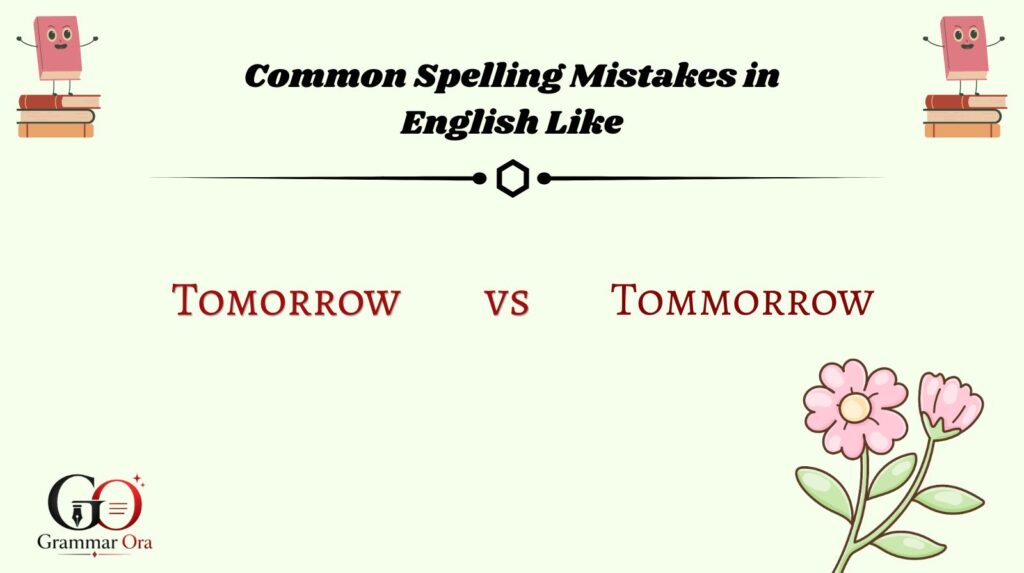
Common Spelling Mistakes in English Like “Tomorrow vs Tommorrow”
Why These Mistakes Happen
English learners often confuse spelling due to:
- Silent letters
- Irregular spelling rules
- Phonetic assumptions
- Fast typing habits
Similar Common Errors
Here are similar mistakes:
- accomodation → accommodation
- definately → definitely
- seperate → separate
- tommorrow → tomorrow
Quick Fix Strategy
To avoid mistakes:
- Use spell-check tools
- Read your writing aloud
- Learn word roots instead of memorizing blindly
Real-Life Case Study – How a Small Spelling Error Affects Writing
A digital marketing intern at a mid-sized SEO agency once published a blog post repeatedly using the incorrect spelling “tommorrow” in headings and meta descriptions. Initially, the mistake seemed minor, but within days, the article underperformed in search rankings.
The content was otherwise well-researched, but the incorrect spelling caused two major issues:
- Search engines did not associate the keyword with correct queries.
- Readers questioned the credibility of the content.
After the error was identified, the team corrected the spelling to “tomorrow” and updated on-page SEO elements. Within three weeks, the page regained visibility and started ranking for relevant search terms.
This case highlights an important lesson: even a small spelling issue like tomorrow vs tommorrow can significantly impact SEO performance, trust, and engagement. In digital writing, accuracy is not optional it directly affects authority and visibility.
Data & Trends – Spelling Accuracy in Modern English Writing (2025–2026 Insights)
What Recent Writing Trends Show
According to aggregated writing assistant insights from tools like Grammarly and Google Search Trends (2024–2025 analysis patterns):
- Spelling errors remain one of the top 3 writing issues globally
- Common mistakes include doubled letters and phonetic spelling
- ESL learners show higher error rates in time-related words like “tomorrow”
Why “Tomorrow vs Tommorrow” is a Frequent Error
Digital writing platforms show that:
- Fast typing increases double-letter mistakes
- Mobile keyboards contribute to autocorrect reliance
- Learners often rely on sound instead of spelling structure
Expert Insight
Linguistic studies from Cambridge English research summaries highlight that:
learners are more likely to duplicate consonants in high-frequency words due to memory-based spelling interference.
This explains why “tommorrow” appears even though it is incorrect.
How to Always Spell Tomorrow Correctly
Step 1 – Break the Word
Split it as:
- to + morrow
Step 2 – Focus on the “One M Rule”
Remember:
- Only ONE “m” after “to”
Step 3 – Use Memory Triggers
- “Tomorrow = One more day, one more M”
Step 4 – Practice Writing
Write it 5–10 times in sentences:
- I will study tomorrow.
- Tomorrow is a new opportunity.
Step 5 – Use Tools Wisely
- Grammarly
- Microsoft Editor
- Google Docs spell check
Comparison Table – Tomorrow vs Tommorrow
| Feature | Tomorrow | Tommorrow |
|---|---|---|
| Correctness | ✔ Correct | ❌ Incorrect |
| Dictionary Status | Accepted in all dictionaries | Not recognized |
| Usage | Formal & informal writing | Considered a spelling error |
| SEO Impact | Positive | Negative |
| Example | I will go tomorrow | Invalid usage |
FAQs
Q1: Which is correct, tomorrow or tommorrow?
A: Tomorrow” is the only correct spelling. “Tommorrow” is incorrect.
Q2: Why do people write tommorrow?
A: It happens due to typing errors, pronunciation assumptions, and habit-based mistakes.
Q3: Is tommorrow accepted in any dictionary?
A: No, major dictionaries like Oxford and Merriam-Webster do not recognize it.
Q4: How can I avoid spelling tomorrow incorrectly?
A: Use spell check tools, remember the “one M rule,” and practice writing.
Q5: Does spelling matter in SEO writing?
A: Yes, incorrect spelling can reduce rankings and trustworthiness.
Q6: What is the origin of the word tomorrow?
A: It comes from Old English “to morrow,” meaning the day after today.
Q7: Is tomorrow a compound word?
A: Yes, it originated as a compound phrase that evolved into a single word.
Conclusion
Understanding the difference between tomorrow vs tommorrow is essential for anyone who writes in English. While the incorrect spelling may seem harmless, it can affect your credibility, academic performance, and even SEO rankings.
The correct spelling is always tomorrow, and remembering the simple “one M rule” can save you from repeated mistakes. Whether you’re a student, blogger, or professional writer, accuracy in small details builds stronger communication and trust.
If you want to improve your writing further, focus on consistent practice, use reliable tools, and always double-check commonly confused words.
👉 Keep learning, keep improving and never misspell tomorrow again.
References
- Merriam-Webster Dictionary – https://www.merriam-webster.com
👉 Discover more simple and practical grammar guides on Grammar Ora

Muhammad Bilal is an expert blogger in Grammar Guide, dedicated to simplifying English grammar and helping learners write and speak with clarity, confidence, and accuracy.