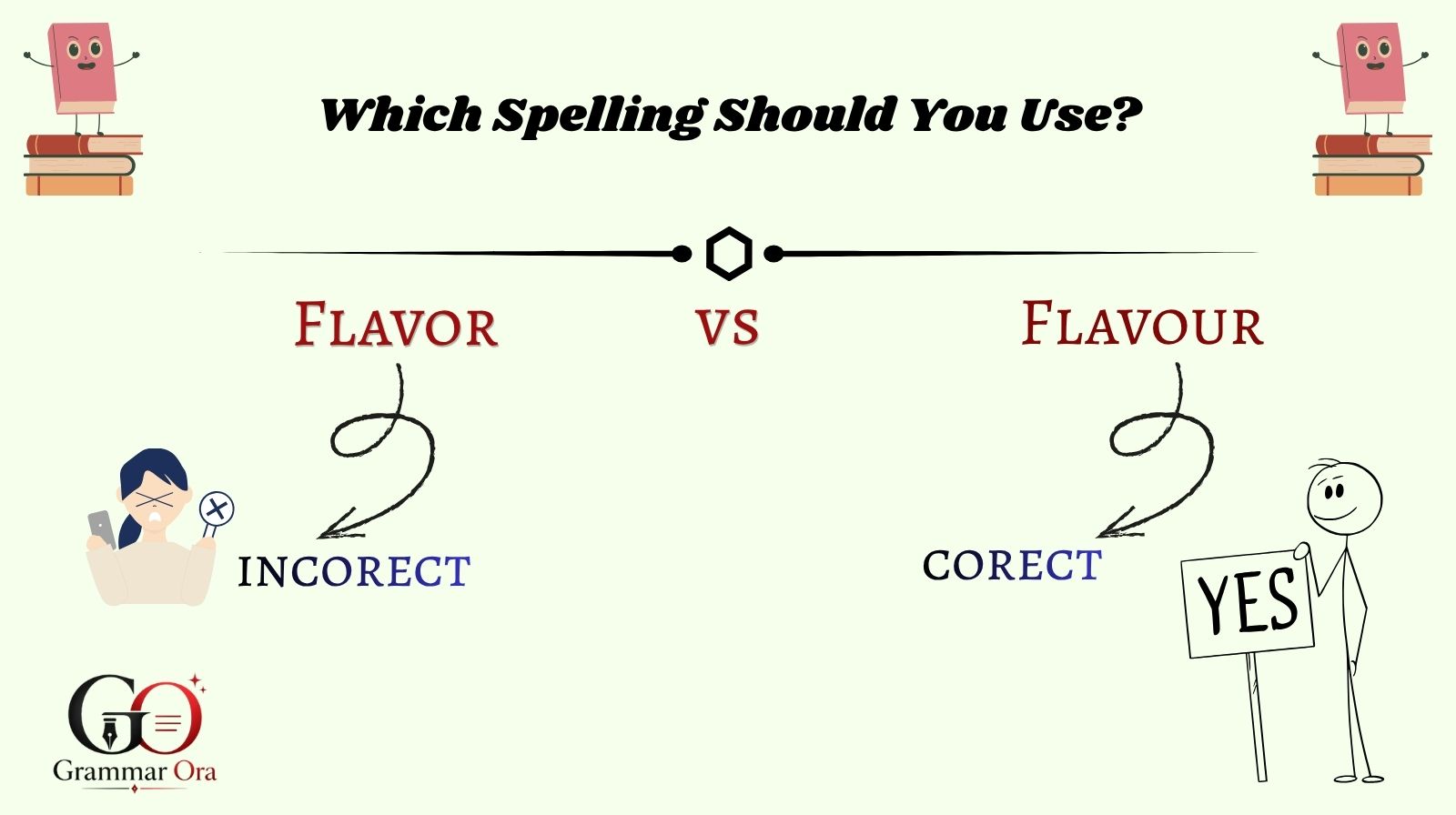
Have you ever paused while writing and wondered whether it should be “flavor” or “flavour”? This small spelling difference often confuses writers, students, and even professional content creators. At first glance, both words look correct and that’s because they are
The confusion around flavor vs flavour comes from regional differences in English spelling, mainly between American English and British English. Understanding when and where to use each form is essential for clear, professional, and audience-appropriate writing.
In this guide, you’ll learn the exact difference between the two spellings, where each is used, why it matters in SEO and writing, and how to avoid common mistakes. By the end, you’ll confidently know which version fits your content perfectly.
Flavor vs Flavour: Understanding the Spelling Difference in English
The debate of flavor vs flavour is not about correctness but about regional English variations. Both spellings are correct depending on where your audience is located. American English prefers “flavor,” while British English uses “flavour.”
This difference is part of a broader pattern in English spelling rules that vary between regions such as color/colour, honor/honour, and favorite/favourite. Understanding these distinctions helps writers maintain consistency and professionalism in their content.
What Does “Flavor vs Flavour” Really Mean?
At its core, both words mean the same thing: taste or quality of something, especially food or drink.
Definition of Flavor
In American English, “flavor” refers to the taste, smell, or overall sensory experience of food or beverages.
Example:
- This ice cream has a rich chocolate flavor.
Definition of Flavour
In British English, “flavour” carries the same meaning but follows UK spelling conventions.
Example:
- This soup has a strong garlic flavour.
No Difference in Meaning
Despite spelling differences, there is no change in meaning, grammar, or usage. The only distinction is regional spelling preference.
Why Do We Have Two Spellings: Flavor vs Flavour?
The difference between flavor vs flavour dates back to language evolution in the 18th and 19th centuries.
Influence of Noah Webster
American English spelling was simplified by lexicographer Noah Webster, who removed extra letters from many words to create a distinct American identity.
British English Tradition
British English retained the original spellings influenced by Latin and French origins, which is why “flavour” keeps the “u.”
Modern Usage Today
Today, both forms are globally accepted, but their usage depends on your audience and writing style guide.
According to linguistic references from:
English spelling variations remain consistent across regions and are standardized in formal writing systems.
Where Should You Use Flavor or Flavour?
Choosing between flavor vs flavour depends on your target audience and writing context.
Use “Flavor” When:
- Writing for American audiences
- Publishing on US-based websites
- Using AP Style or American English SEO content
Use “Flavour” When:
- Targeting UK, Canada, Australia, or New Zealand audiences
- Following British English style guides
- Writing academic or Commonwealth content
SEO Impact of Spelling Choice
Search engines recognize both spellings separately. That means:
- “flavor” ranks better in US search results
- “flavour” performs better in UK search results
For global SEO strategies, many websites create separate pages or use localized content targeting.
Real-Life Case Study: Global Food Blog SEO Strategy
A well-known food blog that publishes recipes globally once struggled with traffic inconsistency. Their articles used only “flavor,” which performed well in the United States but poorly in the UK, Australia, and Canada.
To fix this, they implemented a regional SEO strategy:
- Created separate content versions for US and UK audiences
- Used “flavor” for American pages
- Used “flavour” for British and Commonwealth pages
- Adjusted meta tags and headings accordingly
Within six months, their organic traffic increased significantly across multiple regions. UK-based traffic improved because search engines began ranking “flavour”-optimized pages more effectively.
This case shows that small spelling changes can have a major impact on international SEO performance. It also highlights the importance of understanding flavor vs flavour in content strategy.
Data and Statistics on English Spelling Usage (2025–2026 Trends)
Recent linguistic analysis and search behavior trends (based on global SEO tools and language datasets) show interesting patterns:
Key Observations
- American English (flavor) dominates global search volume due to US internet usage
- British English (flavour) remains strong in academic and Commonwealth regions
- Mobile searches increasingly reflect regional spelling preferences automatically
- SEO tools show nearly equal competition in high-traffic keywords
What This Means for Writers
- Content localization is more important than ever
- One-size-fits-all spelling can reduce regional visibility
- Search engines prioritize user location and language settings
According to insights from:
Modern SEO emphasizes audience-specific spelling and language optimization as part of content relevance.
Comparison Table: Flavor vs Flavour
| Feature | Flavor | Flavour |
|---|---|---|
| English Type | American English | British English |
| Meaning | Taste or quality | Taste or quality |
| Usage Region | USA | UK, Canada, Australia |
| SEO Impact | US search dominance | UK/Commonwealth relevance |
| Correctness | Correct in US | Correct in UK |
Common Mistakes Writers Make
Mixing Both Spellings
Switching between “flavor” and “flavour” in the same article looks unprofessional.
Ignoring Audience Location
Using the wrong spelling can reduce engagement and trust.
Overthinking the Difference
Remember: meaning never changes only spelling does.
How to Choose the Right Spelling Every Time
Step-by-Step Guide
- Identify your target audience
- Choose US or UK English style
- Stay consistent throughout your content
- Use SEO tools to check keyword localization
- Stick to your chosen spelling in headings and meta tags
FAQs
Q1: Is flavor or flavour correct?
A: Both are correct depending on whether you use American or British English.
Q2: Why does American English drop the “u”?
A: Because Noah Webster simplified spellings to make American English distinct.
Q3: Does spelling affect SEO?
A: Yes, spelling impacts regional search rankings and keyword targeting.
Q4: Which spelling should I use for blogging?
A: Use the spelling that matches your target audience.
Q5: Is flavor used worldwide?
A: Yes, but it is mainly associated with American English.
Q6: Can I mix both spellings?
A: It is not recommended; consistency is important for professionalism.
Conclusion
The flavor vs flavour debate is not about right or wrong it’s about understanding language variation and using it strategically. Both spellings are correct, but each belongs to a different English-speaking region.
If your audience is in the United States, use “flavor.” If you’re writing for the UK or Commonwealth countries, use “flavour.” This small adjustment can improve clarity, professionalism, and even SEO performance.
In the world of digital content, details matter. And spelling is one of those powerful details that can shape how your content performs globally. So choose wisely, stay consistent, and always write for your audience first.
👉 Discover more simple and practical grammar guides on Grammar Ora

Muhammad Bilal is an expert blogger in Grammar Guide, dedicated to simplifying English grammar and helping learners write and speak with clarity, confidence, and accuracy.