Have you ever typed “lier” when you actually meant “liar”? You are not alone. Thousands of English learners and even native speakers confuse these two words because they look and sound similar. However, only one of them is considered correct in standard English.
Understanding the difference between lier vs. liar can improve your writing, help you avoid embarrassing mistakes, and make your communication more professional. Whether you are writing emails, blog posts, school assignments, or social media captions, choosing the right word matters.
In this guide, you will learn the real meaning of both words, when to use them, common grammar mistakes, practical examples, and easy memory tricks to remember the difference forever.
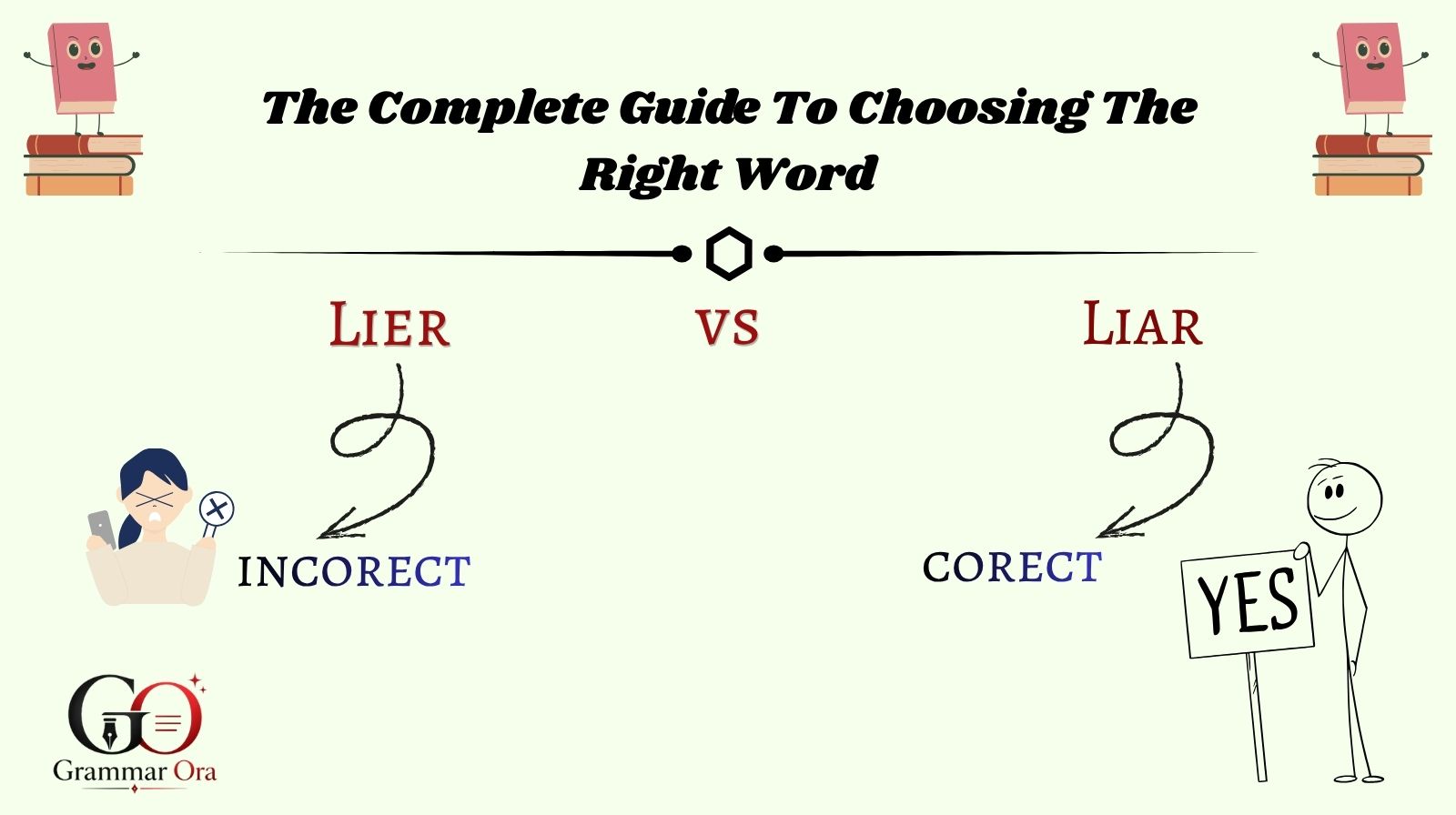
What Is the Difference Between Lier and Liar?
The main difference is simple:
- Liar is a correct English word.
- Lier is usually considered a spelling mistake.
A liar is a person who tells lies or does not tell the truth.
Example Sentences
- He is a liar because he never tells the truth.
- Nobody trusts a liar for long.
- The witness was proven to be a liar in court.
On the other hand, lier is not commonly accepted in modern English dictionaries when referring to someone who lies. Most people who type “lier” actually mean “liar.”
Quick Answer
| Word | Correct? | Meaning |
|---|---|---|
| Liar | ✅ Yes | A person who tells lies |
| Lier | ❌ Usually no | Common misspelling of liar |
Therefore, if you are talking about someone dishonest, always use liar.
Why Do People Confuse Lier and Liar?
English spelling rules are not always consistent. Many people assume that because the verb is “lie,” the person who lies should be spelled “lier.” That assumption sounds logical, but English developed differently over time.
The Verb “Lie”
The verb lie means to say something false intentionally.
Examples:
- She lied about her age.
- They lie to avoid trouble.
However, the noun form changes spelling:
- Lie → Liar
This pattern is similar to other English words where pronunciation changes slightly when suffixes are added.
Common Reasons for the Confusion
Spelling Assumptions
People naturally think:
- bake → baker
- drive → driver
- lie → lier
But English breaks this pattern here.
Pronunciation Similarity
Both words sound very close when spoken quickly, especially in casual conversation.
Autocorrect Mistakes
Some typing tools fail to catch “lier” because it can appear in specialized contexts, although rarely.
Is “Lier” Ever a Real Word?
Technically, “lier” has appeared in some old or specialized English uses. However, it is extremely rare and almost never used in modern writing.
In historical or technical contexts, “lier” could refer to:
- Someone or something that lies in a certain position
- Geological or industrial terminology in older texts
However, these uses are outdated and uncommon.
Modern English Usage
Today, if you write:
“He is a lier.”
Most readers will immediately assume it is a spelling mistake.
That is why professional writers, teachers, editors, and grammar experts recommend using liar whenever referring to dishonesty.
How to Use “Liar” Correctly in Sentences
The word liar is a noun. It describes a person who lies frequently or intentionally.
Simple Examples
- The child admitted he was a liar.
- Nobody likes working with a liar.
- Calling someone a liar can damage relationships.
Professional Examples
- The journalist exposed the politician as a liar.
- Courts carefully examine evidence before labeling someone a liar.
Emotional Context
The word often carries strong emotional meaning because honesty is important in personal and professional relationships.
For example:
- Being called a liar can hurt someone deeply.
- Trust disappears quickly when someone becomes known as a liar.
Therefore, use the word carefully and responsibly.
Lier vs. Liar in Grammar and Spelling Rules
Understanding the grammar behind these words helps avoid future mistakes.
Liar” Follows Standard Dictionary Usage
Every major English dictionary recognizes liar as the correct noun form of “lie.”
According to:
A liar is:
“A person who tells lies.”
Why “Lier” Looks Correct
English learners often apply regular spelling patterns automatically. Unfortunately, English contains many exceptions.
Examples:
| Verb | Expected Noun | Actual Noun |
|---|---|---|
| Teach | Teacher | Teacher |
| Run | Runner | Runner |
| Lie | Lier | Liar |
This inconsistency is one reason English spelling can be difficult.
The Best Way to Remember It
A simple memory trick:
A “liar” has an “a” because dishonest people often make “alibis.”
This small connection helps many learners remember the correct spelling.
Real-Life Example: How a Small Spelling Mistake Hurt Professional Credibility
In 2025, a freelance content writer shared on a public writing forum that they lost a potential client because of repeated spelling mistakes in a business proposal. One of the most noticeable errors was writing “lier” instead of “liar” in an article about online scams.
The client immediately questioned the writer’s attention to detail. Although the mistake seemed small, it reduced trust in the writer’s professionalism. According to the discussion, the client later hired another writer with stronger grammar accuracy.
This example highlights an important reality about communication today. Readers judge credibility quickly. Even one spelling mistake can affect:
- Job opportunities
- Academic grades
- Website authority
- Brand trust
- SEO performance
In digital marketing and blogging, proper spelling also impacts user experience. Visitors are more likely to trust websites that use polished, accurate language.
For example, if someone searches “lier vs liar” on Google, they expect a clear explanation from a reliable source. Articles filled with grammar mistakes often experience higher bounce rates and lower engagement.
Therefore, learning the correct usage of common confusing words is not just about grammar. It also helps build trust, authority, and professionalism online.
Common Mistakes People Make With Lier vs. Liar
Many writers repeat the same errors. Here are the most common ones.
Mistake #1: Using “Lier” in Formal Writing
❌ Incorrect:
- He is a lier.
✅ Correct:
- He is a liar.
Mistake #2: Confusing “Lie” and “Lay”
Some people also confuse:
- Lie
- Lay
- Liar
Examples:
| Word | Meaning |
|---|---|
| Lie | To say something false OR recline |
| Lay | To place something down |
| Liar | A person who lies |
Mistake #3: Trusting Spellcheck Too Much
Spellcheck tools are helpful but not perfect. Always proofread carefully before publishing content.
Data and Language Trends in 2025–2026
Language research tools continue showing high confusion rates between similar English words.
According to search trend analysis from:
grammar-related searches increased significantly between 2024 and 2026. Queries involving spelling confusion, including “lier vs liar,” continue receiving thousands of monthly searches globally.
Why This Matters
The rise of:
- blogging
- remote work
- online education
- AI-assisted writing tools
- social media publishing
has made grammar accuracy more important than ever.
A 2025 digital publishing report also found that readers trust content more when it contains fewer spelling and grammar mistakes. This directly impacts SEO, engagement, and conversions.
Easy Tips to Never Confuse Lier and Liar Again
Here are some practical tips that actually work.
Remember the Dictionary Rule
If you mean “someone who lies,” always write liar.
Read Your Writing Out Loud
Hearing the sentence often helps catch awkward spelling choices.
Use Grammar Tools
Helpful tools include:
- Grammarly
- Hemingway Editor
- Google Docs spelling suggestions
However, manual proofreading is still important.
Practice With Example Sentences
Examples:
- A liar cannot keep trust forever.
- Nobody believed the liar’s excuse.
- The movie’s main character was a skilled liar.
The more you see the correct spelling, the easier it becomes to remember.
Lier vs. Liar: Quick Comparison Table
| Feature | Lier | Liar |
|---|---|---|
| Correct Modern English Word | Rarely | Yes |
| Meaning | Rare/obsolete usage | Person who tells lies |
| Common Usage | Misspelling | Standard English |
| Found in Modern Dictionaries | Usually no | Yes |
| Recommended for Writing | No | Absolutely |
FAQs
Q1: Is “lier” ever correct?
A: In rare historical or technical contexts, yes. However, in modern English, “liar” is almost always the correct word when describing someone dishonest.
Q2: Why is it “liar” and not “lier”?
A: English evolved with irregular spelling patterns. Even though the verb is “lie,” the accepted noun form became “liar.”
Q3: Is “liar” a bad word?
A: It can be considered strong or offensive because it directly attacks someone’s honesty. Use it carefully.
Q4: What part of speech is “liar”?
A: Liar” is a noun because it names a person.
Q5: How can I remember the correct spelling?
Remember:
A: A liar makes alibis.
The letter “a” can help you remember the correct form.
Q6: Do grammar tools catch “lier”?
A: Sometimes yes, but not always. Manual proofreading is still important.
Q7: Which spelling should I use in professional writing?
A: Always use liar unless discussing rare historical language usage.
Conclusion
The confusion between lier vs. liar is extremely common, but the correct choice in modern English is simple. If you are describing someone who tells lies, the correct word is always liar.
Although “lier” may appear in rare historical contexts, it is generally treated as a spelling mistake today. Understanding this difference helps improve your writing accuracy, professionalism, and credibility.
The next time you hesitate between these two spellings, remember this simple rule:
A person who tells lies is a liar.
Small grammar improvements can make a big difference in how readers view your writing. Therefore, continue practicing, proofreading carefully, and building stronger language skills every day.
👉 Discover more simple and practical grammar guides on Grammar Ora

Muhammad Bilal is an expert blogger in Grammar Guide, dedicated to simplifying English grammar and helping learners write and speak with clarity, confidence, and accuracy.