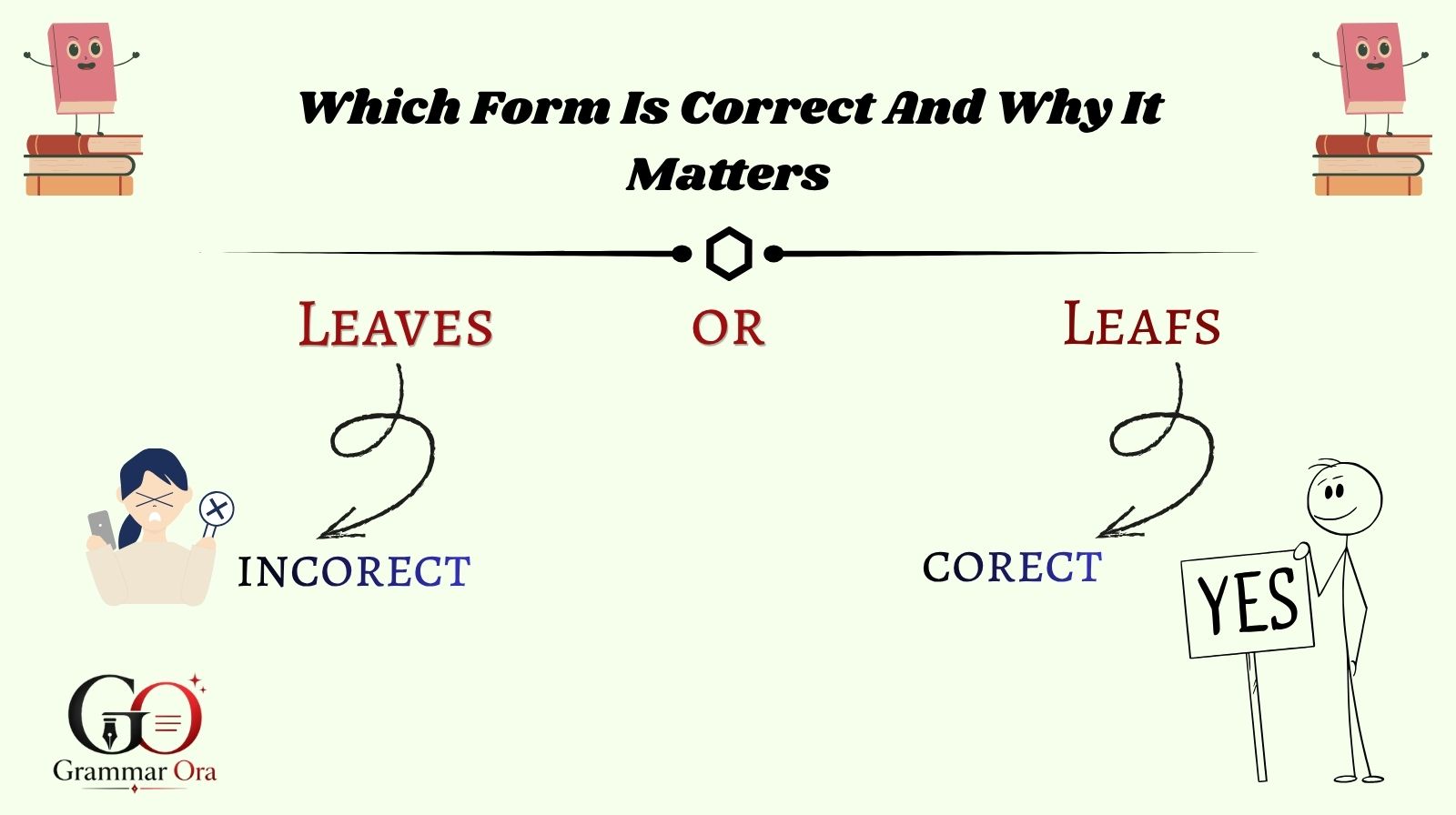
English grammar can be confusing, especially when one word seems to have two different plural forms. A common example is leafs or leaves. Many people wonder which version is correct and when each one should be used. If you have ever typed “leafs” and seen a red underline appear, you are not alone.
The confusion happens because English contains both regular and irregular plural nouns. While most nouns simply add -s, others change completely. In this guide, you will learn the difference between leafs and leaves, why one is usually correct, and the rare situations where the other form still works.
By the end of this article, you will confidently know how to use these words correctly in writing, conversation, school assignments, and professional communication.
What Is the Correct Plural of “Leaf”?
The standard plural form of leaf is leaves.
For example:
- One leaf
- Two leaves
- Green leaves on the tree
- Autumn leaves covering the ground
In English grammar, many nouns ending in -f or -fe change to -ves in the plural form.
Examples include:
| Singular | Plural |
|---|---|
| Leaf | Leaves |
| Knife | Knives |
| Wolf | Wolves |
| Life | Lives |
Therefore, when talking about plant leaves, pages of metal sheets, or anything similar, leaves is the grammatically correct plural form.
Why Does “Leaf” Become “Leaves”?
English developed from several older languages, including Germanic and Latin influences. Over time, pronunciation patterns changed, and certain words evolved into irregular plural forms.
Instead of saying “leafs,” English speakers naturally adopted “leaves” because it sounded smoother in spoken language. Eventually, dictionaries and grammar rules standardized it.
Today, leaves is accepted across academic, professional, and casual writing.
Examples of Correct Usage
Here are some correct examples:
- The leaves turned orange during fall.
- She collected dry leaves for her art project.
- The wind blew the leaves across the street.
- These leaves look unhealthy.
In all these sentences, “leaves” refers to more than one leaf.
Is “Leafs” Ever Correct?
Surprisingly, yes. Although leafs is usually incorrect in standard grammar, it does have specific uses.
The word “leafs” is commonly used as a verb rather than a noun.
For example:
- He leafs through the magazine quickly.
- She leafs through her notebook before class.
Here, leafs comes from the verb to leaf through, which means to turn pages casually.
“Leafs” in Sports and Brand Names
Another famous example appears in sports.
The Toronto Maple Leafs use “Leafs” instead of the grammatically expected “Leaves.” The name was intentionally chosen for branding and historical reasons.
Therefore:
- Correct grammar: maple leaves
- Team name: Toronto Maple Leafs
This exception often causes additional confusion for English learners.
Common Mistake to Avoid
Incorrect:
- The tree has many leafs.
Correct:
- The tree has many leaves.
Unless you are using the verb form or referring to the sports team, leaves is the proper choice.
Leafs vs Leaves: Key Differences Explained
Understanding the difference becomes easier when you compare both words directly.
| Word | Part of Speech | Meaning | Example |
|---|---|---|---|
| Leaves | Noun (plural) | More than one leaf | The leaves are falling. |
| Leafs | Verb | Turns pages quickly | She leafs through the book. |
Quick Grammar Rule
Use leaves when referring to plant foliage or multiple leaf objects.
Use leafs only:
- As a verb
- In proper names like Toronto Maple Leafs
Memory Trick
A simple way to remember this rule:
If it grows on a tree, the plural is “leaves.”
This trick helps many students avoid grammar mistakes while writing.
Why This Grammar Rule Matters in Writing
Small grammar mistakes can affect how readers view your content. Whether you are writing emails, blog posts, academic papers, or social media captions, using the correct plural form improves clarity and professionalism.
Better Communication
Grammar mistakes may confuse readers. For example:
- “The leafs are changing color” sounds unnatural to native English speakers.
Correct grammar creates smoother communication and stronger readability.
SEO and Online Writing
Search engines now prioritize high-quality, trustworthy content. According to Google Search Central, helpful and accurate writing improves user experience and search visibility.
Even minor spelling or grammar issues can reduce reader trust.
Academic and Professional Impact
Teachers, editors, and employers often notice grammar details quickly. Using “leafs” incorrectly may create the impression of weak language skills.
Therefore, understanding plural forms matters more than many people realize.
Common English Words That Follow Similar Rules
The confusion between leafs and leaves becomes easier once you understand similar noun patterns.
Nouns That Change “F” to “VES”
These words follow the same grammar rule:
| Singular | Plural |
|---|---|
| Calf | Calves |
| Half | Halves |
| Shelf | Shelves |
| Thief | Thieves |
Words That Simply Add “S”
However, not all words ending in -f change to -ves.
Examples:
| Singular | Plural |
|---|---|
| Roof | Roofs |
| Chef | Chefs |
| Belief | Beliefs |
This inconsistency is one reason English grammar feels difficult for many learners.
Why English Has Exceptions
English combines rules from multiple language systems. As a result, some plural forms evolved differently over centuries.
According to Merriam-Webster, irregular plurals remain common because they survived historical pronunciation changes.
Real-Life Example: How One Grammar Mistake Hurt a Brand Campaign
In 2025, a small eco-friendly stationery company launched a seasonal marketing campaign focused on autumn products. The campaign included website banners, social media graphics, and email newsletters promoting “Beautiful Autumn Leafs Collection.”
At first, the team believed the wording looked natural. However, users quickly noticed the grammar issue. Several comments on social media pointed out that the correct phrase should be “Autumn Leaves Collection.”
The mistake seemed minor, but engagement rates dropped significantly compared to previous campaigns. Some users even joked about the error, reducing the brand’s credibility among customers.
After correcting the wording, the company updated all promotional materials. Interestingly, the revised campaign performed much better. Website engagement improved, and email click-through rates increased within two weeks.
This example highlights an important reality of online communication: grammar directly influences trust. Readers often associate correct language with professionalism and expertise. Even a single incorrect plural form can affect how people view a brand or business.
For bloggers, students, marketers, and professionals, small grammar details matter because they shape first impressions.
Language Trends and Grammar Statistics (2025–2026)
Recent language and SEO studies show that grammar accuracy continues to impact reader trust and online visibility.
Important Statistics
- A 2025 readability study by HubSpot found that users spend more time on content with clear grammar and easy readability.
- Grammar-related search queries increased during 2025, especially among ESL learners and content creators.
- Educational keyword searches such as “leafs or leaves,” “plural of leaf,” and “grammar mistakes” continue growing globally.
- AI-assisted content tools increased awareness of grammar accuracy because search engines now prioritize human-friendly content quality.
What This Means for Writers
Writers today must focus on:
- Correct grammar
- Natural language
- Clear explanations
- Trustworthy information
Therefore, understanding grammar details like leafs vs leaves is still highly valuable in 2026.
How to Remember the Difference Easily
Learning grammar becomes easier with simple strategies.
Step-by-Step Guide
1. Identify the Meaning
Ask yourself:
- Are you talking about plant foliage?
- Or turning pages?
2. Use “Leaves” for Plants
Examples:
- Green leaves
- Falling leaves
- Tree leaves
3. Use “Leafs” as a Verb
Examples:
- He leafs through the newspaper.
- She leafs through the report.
4. Double-Check Before Publishing
Writers and bloggers should proofread carefully before posting content online.
Tools like Grammarly can help identify grammar mistakes quickly.
FAQs
Q1: Is “leafs” grammatically correct?
A: Yes, but only in specific cases. “Leafs” works as a verb meaning to flip through pages or as part of the Toronto Maple Leafs team name.
Q2: What is the plural of leaf?
A: The correct plural noun form is leaves.
Q3: Why is it leaves instead of leafs?
A: English grammar contains irregular plural forms. Words ending in -f often change to -ves.
Q4: Do all words ending in F become VES?
A: No. Some words become -ves, while others simply add -s.
Examples:
- Wolf → Wolves
- Roof → Roofs
Q5: Is “maple leafs” wrong?
A: Yes, in normal grammar. The correct phrase is “maple leaves.” However, the sports team intentionally uses “Maple Leafs.”
Q6: How can I avoid grammar mistakes like this?
A: Read regularly, practice writing, and use proofreading tools to catch errors before publishing content.
Conclusion
The debate around leafs or leaves is easier to understand once you know the grammar rule behind it. In most situations, leaves is the correct plural form of “leaf.” Meanwhile, leafs only works as a verb or in special names like the Toronto Maple Leafs.
Although the difference seems small, correct grammar improves communication, professionalism, and reader trust. Whether you are writing blog posts, academic papers, or social media content, using the right word helps your message appear more polished and credible.
The next time you see autumn leaves falling from a tree, you will know exactly which word to use confidently.
👉 Discover more simple and practical grammar guides on Grammar Ora

Muhammad Bilal is an expert blogger in Grammar Guide, dedicated to simplifying English grammar and helping learners write and speak with clarity, confidence, and accuracy.