Have you ever typed “treet” and paused for a second, wondering if it should actually be “treat”? You’re not alone. Many English learners and even fluent writers get confused between these two words because they sound almost the same in everyday conversation.
However, there’s a clear difference between them. “Treat” is the correct standard English spelling, while “treet” is usually considered a misspelling, slang variation, or brand name depending on the context. Using the wrong word can make your writing look confusing or unprofessional.
In this simple and easy guide, you’ll learn the real difference between Treet vs Treat, their meanings, correct usage, common mistakes, real-life examples, and simple tricks to remember the right spelling in 2026.
Quick Answer:
“Treat” is the correct word for a reward, special delight, or kind gesture. “Treet” is generally a misspelling and is not accepted in standard English. ✅
What Is the Difference Between Treet and Treat?
The biggest difference is simple:
| Word | Correct in Standard English? | Meaning |
|---|---|---|
| Treat | Yes | Something enjoyable, a reward, or to behave toward someone in a certain way |
| Treet | Usually No | Common misspelling or specific brand/slang usage |
In modern English writing, treat is the accepted spelling in dictionaries and grammar guides. Meanwhile, treet rarely appears in formal English unless it refers to a proper noun, regional dialect, or internet slang.
Why Do People Confuse Treet and Treat?
There are several reasons:
- Both words sound similar when spoken quickly
- Some accents pronounce “treat” closer to “treet”
- Autocorrect mistakes sometimes occur
- Social media slang has normalized unusual spellings
- Non-native English learners often spell words based on pronunciation
For example:
❌ I got a sweet treet today.
✅ I got a sweet treat today.
Therefore, if you are writing academically, professionally, or for SEO content, treat is almost always the correct choice.
What Does “Treat” Mean?
The word treat has multiple meanings in English. It can be used as both a noun and a verb.
Treat as a Noun
As a noun, treat means something enjoyable, special, or rewarding.
Examples:
- Ice cream after dinner was a nice treat.
- The children received Halloween treats.
- Watching movies on weekends feels like a treat.
Treat as a Verb
As a verb, treat means to behave toward someone in a certain way or provide medical care.
Examples:
- Always treat people with respect.
- Doctors treated the patient quickly.
- She treated her friends to dinner.
Common Expressions With Treat
Some popular phrases include:
- Treat yourself
- Treat with care
- Sweet treat
- Special treat
- Trick or treat
Because the word is widely used in daily English, understanding its spelling is important for clear communication.
Is “Treet” Ever a Real Word?
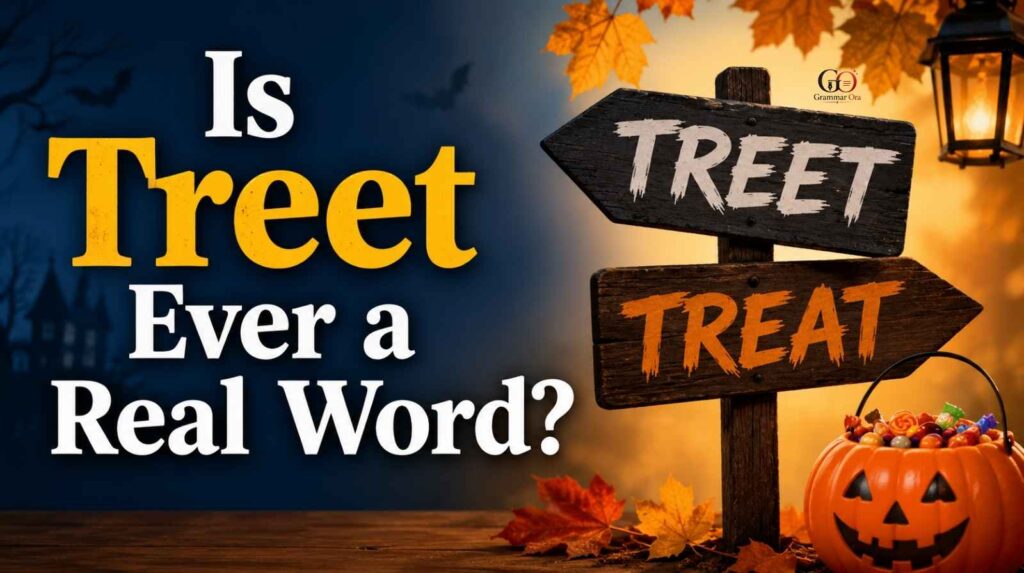
Interestingly, treet is not completely imaginary. While it is not considered standard English in most situations, it does appear in a few specific contexts.
1. Treet as a Brand Name
One known use of “Treet” is as a canned meat brand sold in some countries.
In this case, it is a proper noun, not a grammar alternative to “treat.”
Example:
- My grandfather used to buy Treet sandwiches regularly.
2. Regional or Dialect Usage
Some dialects or accents may pronounce “treat” similarly to “treet.” This sometimes influences spelling online.
However, this spelling is still considered nonstandard in formal writing.
3. Internet Slang or Intentional Misspelling
On social media, people sometimes intentionally misspell words for humor, style, or aesthetics.
Example:
- Time for a lil treet 😄
Although this may appear online, it should not be used in professional content, school assignments, or business communication.
Treet vs Treat: Which One Should You Use?
In almost every writing situation, you should use treat.
Use “Treat” When:
- Writing articles
- Sending emails
- Doing schoolwork
- Creating professional documents
- Posting formal social media content
- Writing SEO blog posts
Examples:
✅ Chocolate cake is my favorite treat.
✅ Please treat customers politely.
Use “Treet” Only When:
- Referring to the brand name
- Quoting slang or dialect
- Mimicking casual speech intentionally
Examples:
✅ He bought a can of Treet from the store.
✅ She jokingly wrote “treet” in her caption.
Therefore, if you are unsure, choosing treat is the safest and grammatically correct option.
Common Mistakes People Make With Treat
Many writers accidentally misuse or misspell the word because English pronunciation can be confusing.
Misspelling Based on Sound
One of the biggest causes is phonetic spelling.
❌ This dessert is such a treet.
✅ This dessert is such a treat.
Mixing Formal and Informal Writing
Some users copy slang from social media into professional writing.
For example:
❌ Enjoy your weekend treet!
✅ Enjoy your weekend treat!
Confusing Autocorrect Suggestions
Sometimes typing quickly on mobile devices creates spelling errors that go unnoticed.
Therefore, proofreading remains important even in 2026 despite advanced AI writing tools and grammar checkers.
Real-Life Example: How a Small Spelling Mistake Hurt Website Traffic
In early 2025, a small dessert blog published an article titled:
“10 Sweet Treet Ideas for Family Parties”
The writer believed “treet” looked creative and unique. However, the article struggled to rank on Google despite having quality images and recipes.
After conducting keyword research, the team discovered that users were overwhelmingly searching for:
- “sweet treats”
- “dessert treats”
- “party treat ideas”
Very few people searched for “sweet treet.”
The blog later updated the article title and headings from “treet” to “treat.” Within three months, organic traffic increased significantly because the content matched real search intent and standard English spelling.
This example highlights an important SEO lesson: even small spelling choices can impact visibility, trust, and readability.
Readers tend to trust content that follows recognized grammar conventions. Search engines also better understand standard spelling patterns. Therefore, using the correct form improves both user experience and SEO performance.
Treet vs Treat Comparison Table
Here is a quick comparison guide:
| Feature | Treat | Treet |
|---|---|---|
| Standard English word | Yes | Usually No |
| Found in dictionaries | Yes | Rarely |
| Appropriate for formal writing | Yes | No |
| Common in SEO keywords | Yes | Very limited |
| Used in professional communication | Yes | No |
| Can appear as a brand name | No | Yes |
| Commonly considered a typo | No | Yes |
This table makes it easier to remember which spelling works best in most situations.
Why Correct Spelling Matters in 2026
Correct spelling is more important than ever today because digital communication dominates daily life.
SEO and Search Rankings
Google prioritizes content that matches user intent and recognized language patterns.
Using incorrect spellings can:
- Reduce keyword relevance
- Lower click-through rates
- Hurt credibility
- Confuse readers
According to recent search behavior studies from Google Search Central, content clarity and helpfulness remain major ranking factors in 2025–2026.
Professional Credibility
Whether you are a student, blogger, freelancer, or business owner, spelling affects how others perceive your expertise.
For example:
- Correct spelling builds trust
- Errors may appear careless
- Readers are more likely to leave pages with grammar mistakes
User Experience
People prefer content that feels easy and natural to read. Therefore, correct spelling improves readability and engagement.
Research shared by HubSpot continues to show that clear writing increases audience retention and conversion rates.
How to Remember the Correct Spelling of Treat
A simple memory trick can help.
Memory Tip
Think of the word:
Treat = Tea + Reward
Both words begin with “trea” and feel pleasant.
Another easy trick:
- Treat contains the word “eat”
- A treat is often something delicious to eat
Examples:
- Sweet treat
- Chocolate treat
- Birthday treat
Meanwhile, “treet” does not follow normal English spelling patterns, making it easier to recognize as incorrect in most cases.
Examples of “Treat” in Sentences
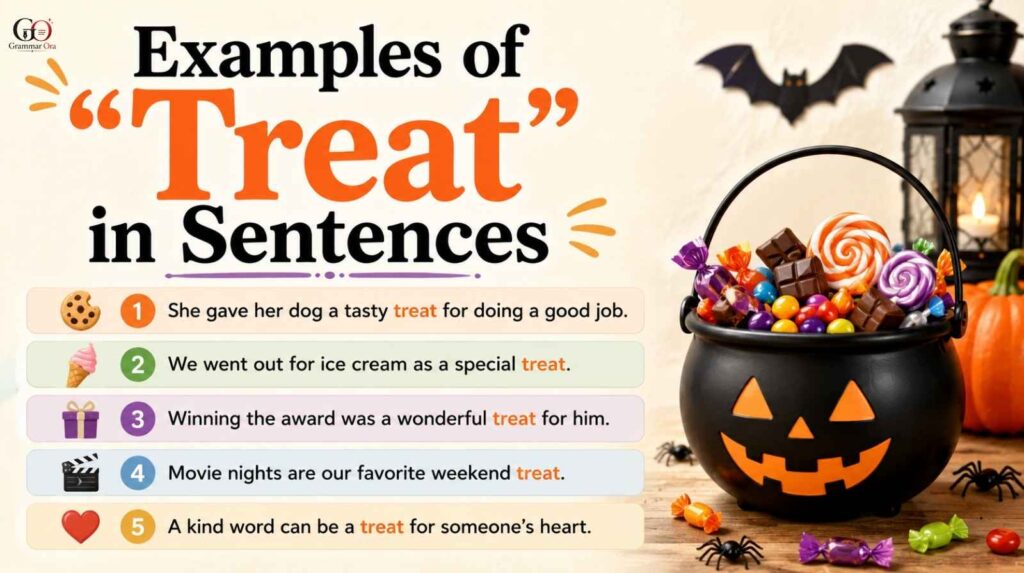
Here are some real-world examples to help you understand proper usage.
Everyday Conversation
- We bought donuts as a morning treat.
- She treated herself to a spa day.
- Grandparents often treat children kindly.
Professional Context
- Companies should treat employees fairly.
- The hotel treated guests respectfully.
- Doctors treated the emergency quickly.
Educational Context
- Teachers should treat all students equally.
- Positive feedback can treat anxiety indirectly by building confidence.
Using examples regularly helps reinforce the correct spelling naturally.
FAQs
Q1: Is “treet” a correct English word?
A: Usually no. In standard English, “treat” is the correct spelling. “Treet” may appear as slang, dialect, or a brand name.
Q2: Which spelling should I use in formal writing?
A: You should use treat in essays, articles, emails, business writing, and professional communication.
Q3: Why do people type “treet” instead of “treat”?
A: Most people spell it that way because of pronunciation similarities, typing errors, or internet slang trends.
Q4:Is “treet” accepted in dictionaries?
A: Most major dictionaries recognize “treat,” not “treet,” except in special noun contexts like brand names.
Q5: Does spelling affect SEO rankings?
A: Yes. Correct spelling helps search engines understand content better and improves reader trust and engagement.
Q6: Can I use “treet” on social media?
A: You can use it informally for humor or style, but it is not recommended for professional or educational content.
Q7: What is the easiest way to remember “treat”?
A: Remember that a treat is often something good to eat. Both words contain “eat.”
Final Thoughts
The confusion between Treet vs Treat is understandable because the words sound similar in casual speech. However, in standard English, treat is the correct and widely accepted spelling.
While “treet” may occasionally appear as slang, dialect, or a brand name, it should generally be avoided in formal writing, SEO content, academic work, and professional communication.
Using the correct spelling improves:
- Readability
- Trustworthiness
- SEO performance
- Professional credibility
Therefore, the next time you are unsure whether to write “treet” or “treat,” remember this simple rule:
If you mean a reward, enjoyable experience, or respectful behavior, the correct spelling is almost always treat.
👉 Discover more simple and practical grammar guides on Grammar Ora

Muhammad Bilal is an expert blogger in Grammar Guide, dedicated to simplifying English grammar and helping learners write and speak with clarity, confidence, and accuracy.