Have you ever paused while writing and wondered whether to use “unkept” or “unkempt”? You’re not alone. Many writers, students, and even professionals get stuck on this small but tricky word choice.
At first glance, both words seem correct. However, only one is widely accepted in standard English. Understanding the difference can instantly improve your writing clarity and professionalism.
In this guide, you’ll learn the correct word, why confusion happens, and how to use it confidently so you never second-guess yourself again.
What Is the Correct Word: Unkept or Unkempt?
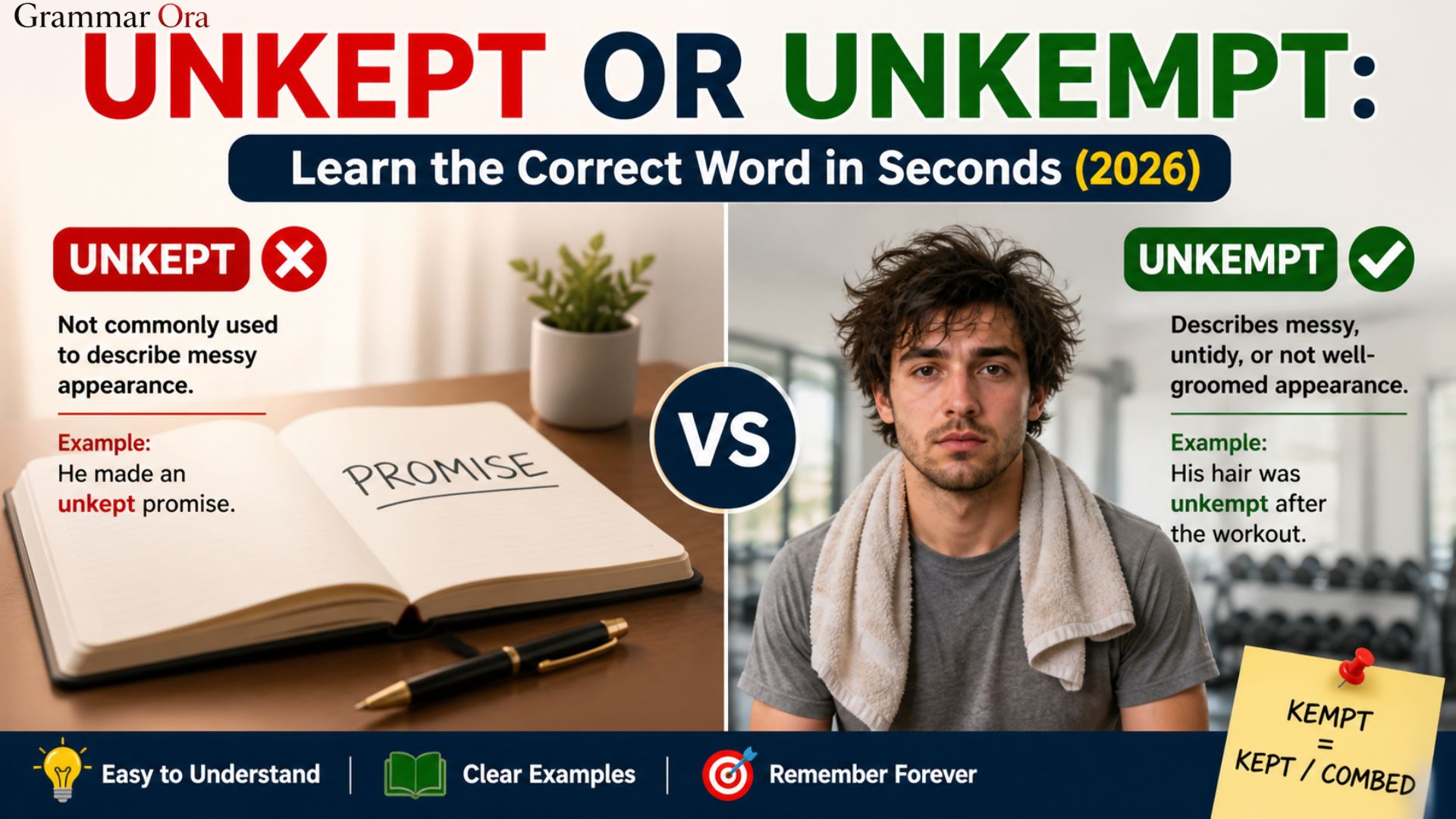
The correct and standard word is “unkempt.”
What Does “Unkempt” Mean?
“Unkempt” describes something that looks messy, untidy, or not well-maintained.
Examples:
- His hair looked unkempt after waking up.
- The garden appeared unkempt due to neglect.
- She arrived with an unkempt outfit.
Is “Unkept” a Real Word?
Technically, “unkept” can exist as the past participle of “keep,” but it is not used to describe appearance or neatness.
Example:
- He made an unkept promise. ✅ (rare but possible)
However:
- ❌ “His hair is unkept” → Incorrect
- ✅ “His hair is unkempt” → Correct
Why People Confuse Unkept and Unkempt
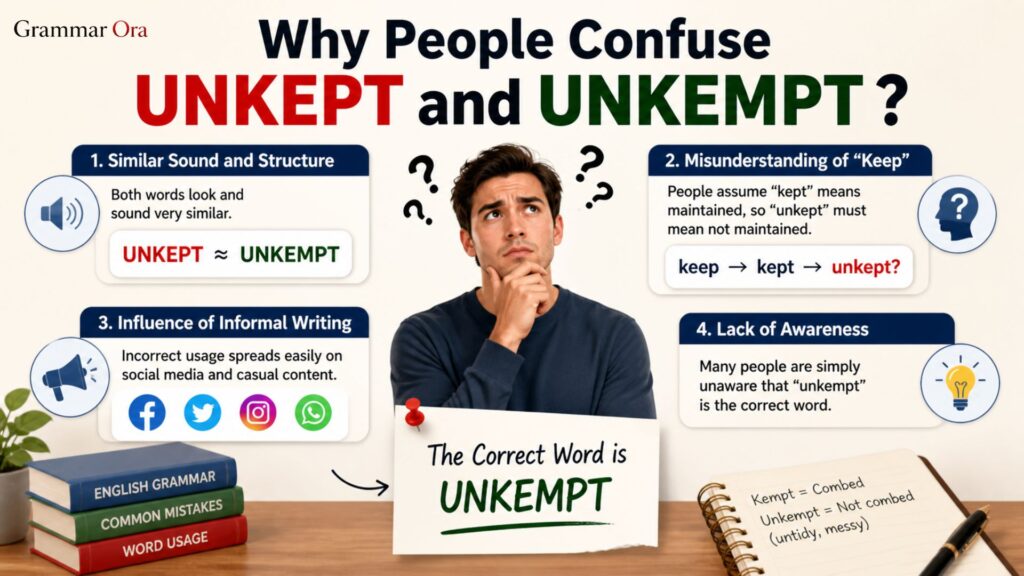
This confusion happens for a few simple reasons.
Similar Sound and Structure
Both words look and sound alike, making them easy to mix up in writing.
Misunderstanding of “Keep”
People assume:
- “kept” → maintained
- “unkept” → not maintained
While logical, English doesn’t always follow strict patterns.
Influence of Informal Writing
On social media and blogs, incorrect usage spreads quickly, reinforcing the mistake.
Unkempt Meaning and Usage in Detail
To use “unkempt” correctly, it helps to understand its deeper meaning.
Origin of the Word
“Unkempt” comes from the old English word “kempt,” meaning “combed” or “well-groomed.” Adding “un-” reverses the meaning.
Common Use Cases
Personal Appearance
- Unkempt hair
- Unkempt beard
- Unkempt clothing
Places and Objects
- Unkempt garden
- Unkempt room
- Unkempt workspace
Tone and Context
“Unkempt” often carries a slightly negative tone, implying neglect or lack of care.
Real-Life Case Study: A Simple Mistake That Cost Credibility
In 2025, a freelance content writer shared a LinkedIn post describing a client’s office as “unkept and disorganized.” Within hours, several readers pointed out the incorrect usage.
Although the content itself was strong, the small grammar mistake affected how readers perceived the writer’s expertise. One potential client even commented that attention to detail is critical in professional writing.
After correcting the word to “unkempt,” the writer updated the post and acknowledged the mistake. Interestingly, engagement increased afterward because readers appreciated the transparency.
Key takeaway:
Even minor word errors like “unkept vs unkempt” can impact credibility especially in professional or SEO writing.
Data & Trends: Why Correct Word Usage Matters (2025–2026)
Recent language and SEO studies highlight the importance of accuracy:
- According to a 2025 report by Google Search Quality Guidelines, content clarity directly impacts ranking and user trust.
- A 2026 survey by HubSpot found that 74% of readers lose trust in content with noticeable grammar mistakes.
- Grammarly usage data (2025) shows that commonly confused words (like unkept vs unkempt) are among the top writing errors globally.
What This Means for You
- Correct usage improves SEO rankings
- Enhances reader trust
- Builds authority and professionalism
Unkept vs Unkempt: Quick Comparison Table
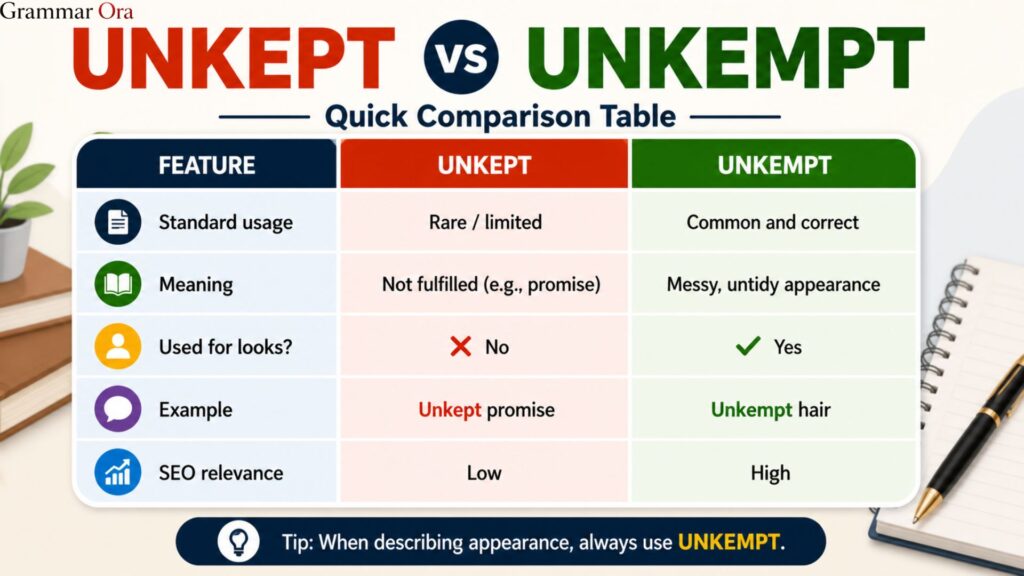
| Feature | Unkept | Unkempt |
|---|---|---|
| Standard usage | Rare limited | Common and correct |
| Meaning | Not fulfilled (e.g., promise) | Messy, untidy appearance |
| Used for looks? | ❌ No | ✅ Yes |
| Example | Unkept promise | Unkempt hair |
| SEO relevance | Low | High |
How to Remember the Correct Word Easily
Here’s a simple trick:
Memory Hack
Think:
👉 “Kempt = Combed”
👉 “Unkempt = Not combed (messy)”
Step-by-Step Tip
- Ask: Am I describing appearance?
- If yes → Use unkempt
- If talking about promises → Rarely use unkept
Common Mistakes to Avoid
❌ Incorrect Usage
- His clothes are unkept
- She looked unkept at the event
✅ Correct Usage
- His clothes are unkempt
- She looked unkempt at the event
Pro Tip
When in doubt, always choose unkempt for describing anything messy or untidy.
FAQs
Q1. Is “unkept” grammatically correct?
A: Yes, but it is rarely used and not appropriate for describing appearance.
Q2. Which is correct: unkept hair or unkempt hair?
A: “Unkempt hair” is the correct and standard phrase.
Q3. Why is “unkempt” more common?
A: Because it specifically describes untidiness, while “unkept” does not.
Q4. Can I use unkept in formal writing?
A: Only in rare contexts like “unkept promises,” but it’s better avoided.
Q5. Is unkempt informal or formal?
A: “Unkempt” is acceptable in both formal and informal writing.
Q6. What is the opposite of unkempt?
A: Neat, tidy, well-groomed.
Conclusion
To sum it up, the debate between unkept or unkempt has a clear winner: unkempt is the correct word when describing something messy or untidy.
While “unkept” may exist in limited contexts, it should not be used for appearance. Choosing the right word not only improves your writing but also strengthens your credibility and SEO performance.
If you want your content to rank higher and sound more professional, mastering small distinctions like this makes a big difference.
👉 Explore more useful grammar tips and guides on Grammar Ora

Muhammad Bilal is an expert blogger in Grammar Guide, dedicated to simplifying English grammar and helping learners write and speak with clarity, confidence, and accuracy.