Have you ever typed “tweek” when you actually meant“tweak”? You’re not alone. Thousands of English learners and even native speakers make this spelling mistake every year. Since both words look similar and sound almost the same, it’s easy to confuse them.
The good news is that only one spelling is correct in standard English. In this guide, you’ll learn the difference between tweek vs tweak, discover why people misspell it, see real-world examples, and learn a simple trick to remember the correct spelling forever.
Is It Tweek or Tweak?

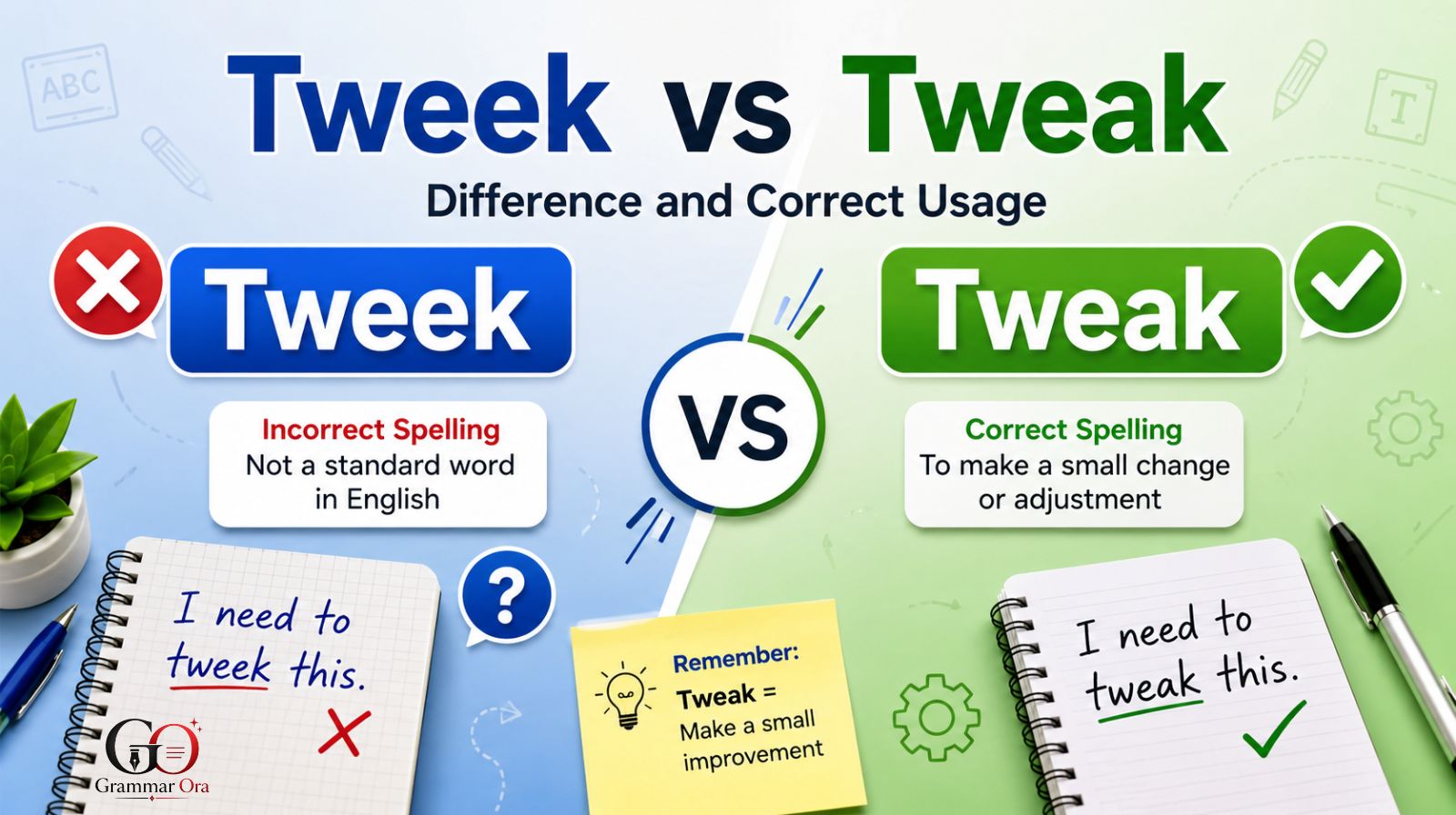
The correct spelling is tweak.
Tweek is generally considered a misspelling and is not recognized as a standard English word in major dictionaries.
Quick Answer
| Word | Correct? | Meaning |
|---|---|---|
| Tweak | ✅ Yes | To make a small change or adjustment |
| Tweek | ❌ No | Misspelling of tweak |
If you’re writing for school, work, blogging, or social media, always use tweak.
What Does “Tweak” Mean?
The verb tweak means to make a small change in order to improve something. It can also mean to pinch or pull something lightly, though this meaning is less common today.
Common Uses of Tweak
Improve Something
- I need to tweak my resume before applying.
- She tweaked the presentation to make it clearer.
Adjust Settings
- He tweaked the camera settings for better lighting.
- The developer tweaked the website’s speed.
Make Minor Changes
- We only need to tweak the design a little.
- The recipe was tweaked to include less sugar.
Why Do People Write “Tweek”?
The mistake usually happens because English spelling isn’t always predictable.
Common reasons include:
- The pronunciation sounds similar.
- People confuse it with words ending in -eek, such as week.
- Autocorrect doesn’t always catch the error.
- Fast typing leads to accidental spelling mistakes.
Although tweek appears online, it remains a spelling error in formal English.
Tweek vs Tweak: Side-by-Side Comparison
| Feature | Tweek | Tweak |
|---|---|---|
| Standard English | ❌ No | ✅ Yes |
| Dictionary Word | ❌ No | ✅ Yes |
| Correct in Writing | ❌ No | ✅ Yes |
| Means Small Adjustment | ❌ No | ✅ Yes |
| Recommended for SEO & Professional Writing | ❌ Never | ✅ Always |
Real-Life Example: A Blogger’s Costly Typo
Emma runs a technology blog where she regularly publishes software tutorials. One day, she wrote an article titled “How to Tweek Windows Settings for Better Performance.”
After several weeks, the article received very little organic traffic. While reviewing her content, she realized the title contained the misspelled word “tweek.” Most users searched for “how to tweak Windows settings”, not the incorrect spelling.
She updated the title, headings, image alt text, and content to use the correct spelling “tweak.” Within the next few months, her article began ranking for relevant search terms and attracted significantly more visitors.
The lesson is simple: even one spelling mistake in an important keyword can reduce credibility and make it harder for readers to find your content. Using the correct spelling improves professionalism, user trust, and search visibility.
Tweak in Different Contexts
Technology
Developers tweak code to improve performance.
Writing
Editors tweak sentences for clarity and readability.
Photography
Photographers tweak brightness, contrast, and colors.
Business
Companies tweak marketing campaigns after reviewing customer feedback.
Everyday Conversation
People often say they need to tweak their plans before making a final decision.
2025–2026 Language and Search Trends
Recent search behavior shows that “tweak” remains the overwhelmingly preferred spelling in dictionaries, educational resources, and online publications. Misspellings like “tweek” still appear in search queries because users often type words based on pronunciation.
Language experts continue to recommend using standard dictionary spellings in professional writing, blog posts, academic work, and business communication. Correct spelling also improves readability, credibility, and search engine understanding of your content.
How to Remember the Correct Spelling
A simple memory trick:
- Tweak = Weak adjustment = Small change
- Both tweak and weak contain “ea.”
Whenever you think about making a small adjustment, remember ea in tweak.
Common Mistakes to Avoid

❌ I need to tweek my website.
✅ I need to tweak my website.
❌ She tweeked the report yesterday.
✅ She tweaked the report yesterday.
❌ Let’s do a quick tweek.
✅ Let’s do a quick tweak.
FAQs
Q1: Is “tweek” a real English word?
A: No. It is considered a misspelling of tweak in standard English.
Q2: Which spelling is correct: tweak or tweek?
A: Tweak is the only correct spelling.
Q3: What does tweak mean?
A: It means to make a small adjustment or improvement.
Q4: Why do people spell it as tweek?
A: Because it sounds similar and is often typed incorrectly.
Q5: Is tweak formal English?
A: Yes. It is widely accepted in formal and informal writing.
Q6: Can I use tweek in academic writing?
A: No. Always use tweak.
Q7: Does Google recognize “tweek”?
A: Google usually understands it as a misspelling and often suggests tweak.
Q8: How can I remember the correct spelling?
A: Remember that tweak contains “ea”, just like weak, making it easier to associate with a small adjustment.
Conclusion
When comparing Tweek vs Tweak, the answer is straightforward: tweak is the correct spelling, while tweek is simply a common misspelling.
Whether you’re writing emails, blog posts, essays, or social media captions, using tweak ensures your writing is accurate, professional, and easy to understand.
The next time you’re tempted to type tweek, pause for a moment and remember: small improvements always start with the correct spelling tweak.
👉 Discover more simple and practical grammar guides on Grammar Ora

Muhammad Bilal is an expert blogger in Grammar Guide, dedicated to simplifying English grammar and helping learners write and speak with clarity, confidence, and accuracy.