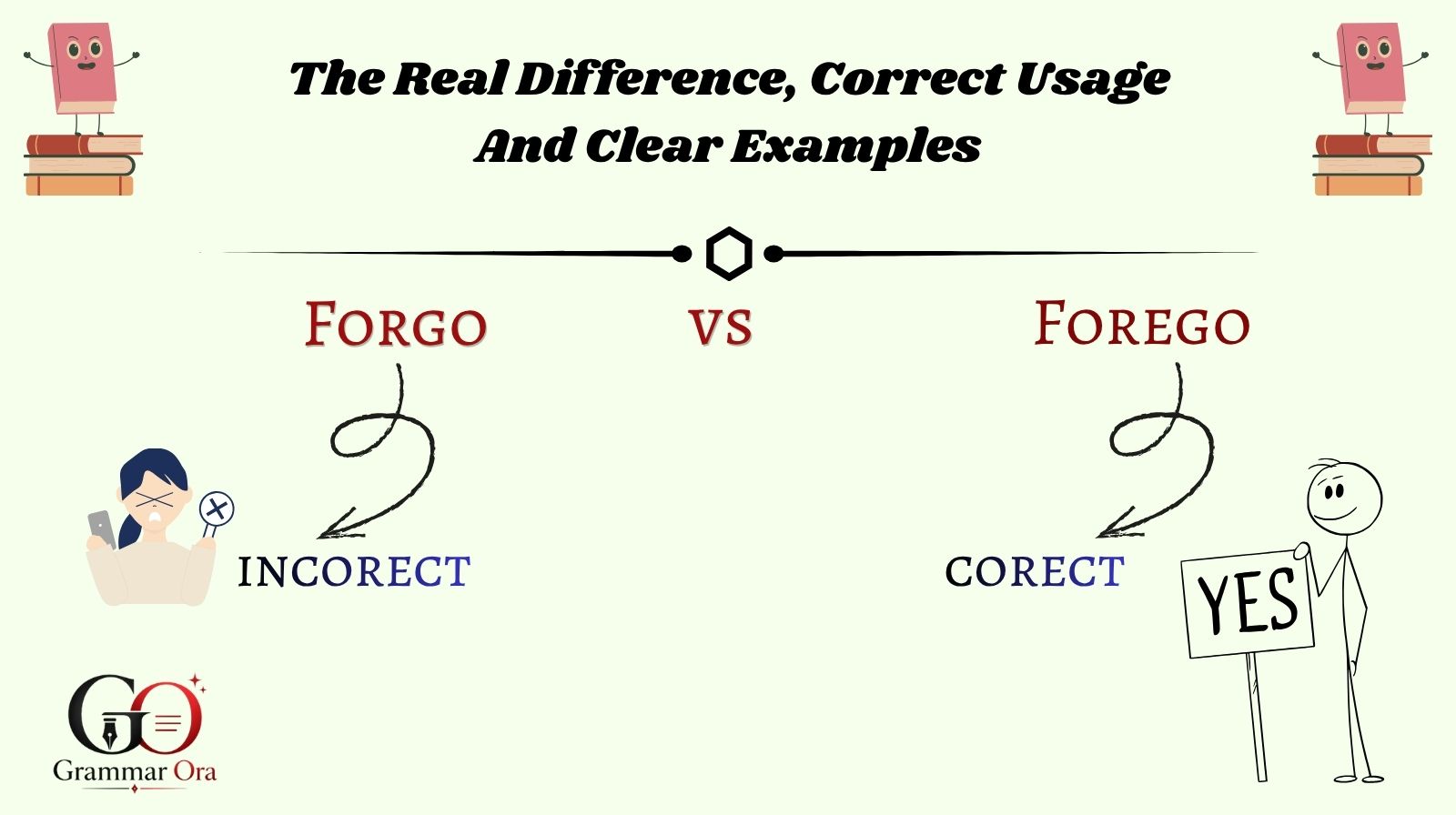
Have you ever stopped while writing and wondered whether you should use forgo or forego? You’re not alone. These two words look so similar that many people assume they mean the same thing. In reality, they have different meanings, and using the wrong one can make your writing confusing or inaccurate.
The confusion is understandable because both words are common in English, and you’ll often see them used incorrectly online. Whether you’re writing an email, an essay, a blog post, or a professional document, knowing the difference can help you communicate more clearly and confidently.
In this guide, we’ll break down the meaning of forgo and forego, explain when each word should be used, look at real examples, and share simple tips to help you remember the difference. By the end, you’ll know exactly which word fits your sentence and why.
What Is the Difference Between Forgo and Forego?
The main difference is simple:
| Word | Meaning | Example |
|---|---|---|
| Forgo | To give up, do without, or abstain from something | I decided to forgo dessert. |
| Forego | To go before; preceding (traditional meaning) | The forego section explained the basics. |
Today, many dictionaries recognize forego as an alternative spelling of forgo in some contexts. However, most modern style guides still recommend using:
- Forgo = give up
- Forego = precede or come before
Quick Answer
If you mean “give up”, choose forgo.
If you mean “precede” or “go before”, choose forego.
Understanding the Meaning of Forgo
What Does Forgo Mean?
Forgo means to voluntarily decide not to have, use, or enjoy something.
It often implies sacrificing something desirable for a greater purpose or practical reason.
Common Situations Where Forgo Is Used
People often forgo:
- Vacations
- Promotions
- Luxury purchases
- Meals
- Entertainment
- Bonuses
- Opportunities
Examples of Forgo in Sentences
- She chose to forgo her annual bonus to support the startup.
- We decided to forgo dessert after dinner.
- Many students forgo full-time jobs while completing their degrees.
- He agreed to forgo payment for the first month.
Why Writers Use Forgo
The word sounds formal and concise. Instead of saying:
“He decided not to take the offer.”
You can write:
“He decided to forgo the offer.”
This creates cleaner, more professional writing.
Understanding the Meaning of Forego
What Does Forego Mean?
Traditionally, forego means:
To go before, precede, or come earlier.
The word originates from Old English roots meaning “to go before.”
Examples of Forego in Sentences
- The foregoing chapter discussed grammar fundamentals.
- The forego remarks introduced the speaker.
- The events that forego the ceremony are carefully planned.
Modern Usage Challenges
Many modern writers incorrectly use forego when they actually mean forgo.
For example:
❌ I will forego dessert.
Although some dictionaries accept this usage, many editors prefer:
✅ I will forgo dessert.
Why the Confusion Exists
The confusion comes from pronunciation.
Both words are commonly pronounced similarly in everyday speech, making spelling mistakes extremely common.
Why Forgo and Forego Are Frequently Confused
Several factors contribute to the confusion.
Similar Appearance
The words differ by only one letter:
- Forgo
- Forego
This tiny difference makes mistakes easy.
Similar Pronunciation
Many English speakers pronounce them nearly identically.
Dictionary Acceptance
Some dictionaries list forego as a variant spelling of forgo, which creates additional uncertainty.
Changing Language Usage
Language evolves over time. While traditional distinctions remain important, modern usage has blurred the line between the two terms.
As a result, many writers encounter conflicting advice.
Forgo vs Forego in Modern Style Guides
Professional editors generally follow the traditional distinction.
Associated Press (AP Style)
AP Style typically favors:
- Forgo for “give up”
- Forego for “precede”
Academic Writing
Universities often teach the distinction because clarity matters in formal communication.
Business Communication
Business professionals usually prefer forgo when discussing sacrifices, costs, benefits, or opportunities.
Examples:
- Forgo profits
- Forgo compensation
- Forgo benefits
- Forgo a raise
Publishing Industry
Most publishers recommend keeping the words separate to avoid ambiguity.
Doing so makes your writing easier to understand.
Real-Life Case Study: How One Small Word Changed a Business Contract
In 2025, a content marketing agency revised a client contract involving performance bonuses.
The original sentence stated:
“The consultant agrees to forego any additional compensation during the probationary period.”
During legal review, one editor questioned whether the word should be forgo instead.
At first glance, the difference seemed insignificant. However, legal teams noted that forego could theoretically be interpreted according to its traditional meaning of “precede.”
To eliminate ambiguity, the contract was revised:
“The consultant agrees to forgo any additional compensation during the probationary period.”
The updated wording clearly communicated that the consultant was voluntarily giving up extra payment.
This small correction prevented possible misunderstandings and improved contractual clarity.
The lesson is important for anyone writing professional documents. Even minor word choices can affect interpretation, especially in business, legal, academic, and technical writing.
Professional editors often focus on distinctions like forgo vs. forego because precision builds trust and prevents confusion.
Forgo vs Forego Comparison Table
Side-by-Side Comparison
| Feature | Forgo | Forego |
|---|---|---|
| Primary Meaning | Give up | Go before |
| Modern Usage | Very common | Less common |
| Business Writing | Frequently used | Rare |
| Academic Writing | Common | Context-specific |
| AP Style Preferred | Yes | Only for “precede” |
| Risk of Confusion | Low | Higher |
| Recommended for Sacrifice Meaning | Yes | No |
Easy Memory Trick
Think:
Forgo = Forget + Go Without
If you’re giving something up, use forgo.
Forego = Before Go
If something comes before another thing, use forego.
2025–2026 Language Trends and Usage Data
Language databases and digital writing platforms continue to show a strong preference for forgo when expressing the idea of giving something up.
Recent usage analyses from major dictionaries, educational resources, and grammar platforms indicate that:
- Forgo overwhelmingly dominates professional writing.
- Forego appears less frequently outside historical or specialized contexts.
- Editors increasingly recommend using forgo whenever the meaning is “to abstain.”
- Search interest for grammar-related questions involving “forgo vs forego” continues to grow due to ongoing confusion among writers.
The rise of online publishing, blogging, and AI-assisted writing tools has also increased awareness of precise word choice, making grammar distinctions more important than ever.
Common Mistakes to Avoid
Mistake #1: Using Forego for Every Situation
❌ We decided to forego lunch.
Preferred:
✅ We decided to forgo lunch.
Mistake #2: Ignoring Context
Always determine whether you mean:
- Give up
- Come before
The intended meaning determines the correct word.
Mistake #3: Assuming They Are Always Interchangeable
Although some dictionaries allow overlap, professional writing benefits from keeping the meanings distinct.
Mistake #4: Copying Informal Usage
Online posts often contain grammar mistakes. Verify usage before publishing important content.
Expert Tips for Remembering the Difference
Use This Formula
- Giving something up → Forgo
- Coming before → Forego
Visual Memory Trick
Imagine:
Forgo = Go without
Forego = Before go
When in Doubt
If your sentence involves sacrifice, skipping, declining, or abstaining, choose forgo.
This rule works in most modern writing situations.
FAQs
Q1: Is forego incorrect?
A: No. Forego is a legitimate English word. Traditionally, it means “to go before” or “precede.”
Q2: Is forgo a real word?
A: Yes. Forgo is the standard word used when someone voluntarily gives up something.
Q3: Can forego mean give up?
A: Some dictionaries accept this usage, but many editors and style guides still prefer using forgo for clarity.
Q4: Which spelling should I use in professional writing?
A: Use forgo when you mean “give up.” This is the safest and most widely accepted choice.
Q5: Why do people confuse forgo and forego?
A: They look similar, sound similar, and some dictionaries acknowledge overlapping usage.
Q6: Is foregoing related to forego?
A: Yes. “Foregoing” often means something mentioned earlier or preceding.
Q7: Which word appears more often in modern English?
A: Forgo is significantly more common in contemporary business, academic, and online writing.
Conclusion
Understanding forgo vs. forego is easier once you focus on their core meanings. Forgo means to give up or do without something, while forego traditionally means to precede or come before. Although modern usage sometimes overlaps, professional writers, editors, and style guides generally recommend keeping the distinction clear.
When you want to express sacrifice or voluntary abstinence, use forgo. When referring to something that comes earlier, use forego. Following this simple rule will make your writing more precise, professional, and easier for readers to understand.
The next time you encounter forgo vs. forego, you’ll know exactly which word belongs in your sentence.
References
👉 Discover more simple and practical grammar guides on Grammar Ora

Muhammad Bilal is an expert blogger in Grammar Guide, dedicated to simplifying English grammar and helping learners write and speak with clarity, confidence, and accuracy.