Have you ever paused while writing parents’ vs parent’s, wondering which one is correct? You’re not alone. Apostrophes are one of the most common grammar challenges in English, and even experienced writers occasionally hesitate.
The good news is that the difference is actually simple once you understand who owns what. Whether you’re writing a school essay, an email, or social media post, using the correct possessive form makes your writing look more professional and easier to understand.
In this guide, you’ll learn the meaning of parents’ vs parent’s, when to use each one, easy grammar rules, practical examples, common mistakes to avoid, and a simple trick you’ll remember every time.
Parents’ vs Parent’s: What’s the Difference?
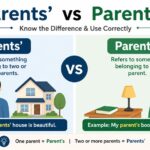
The difference depends on how many parents own something.
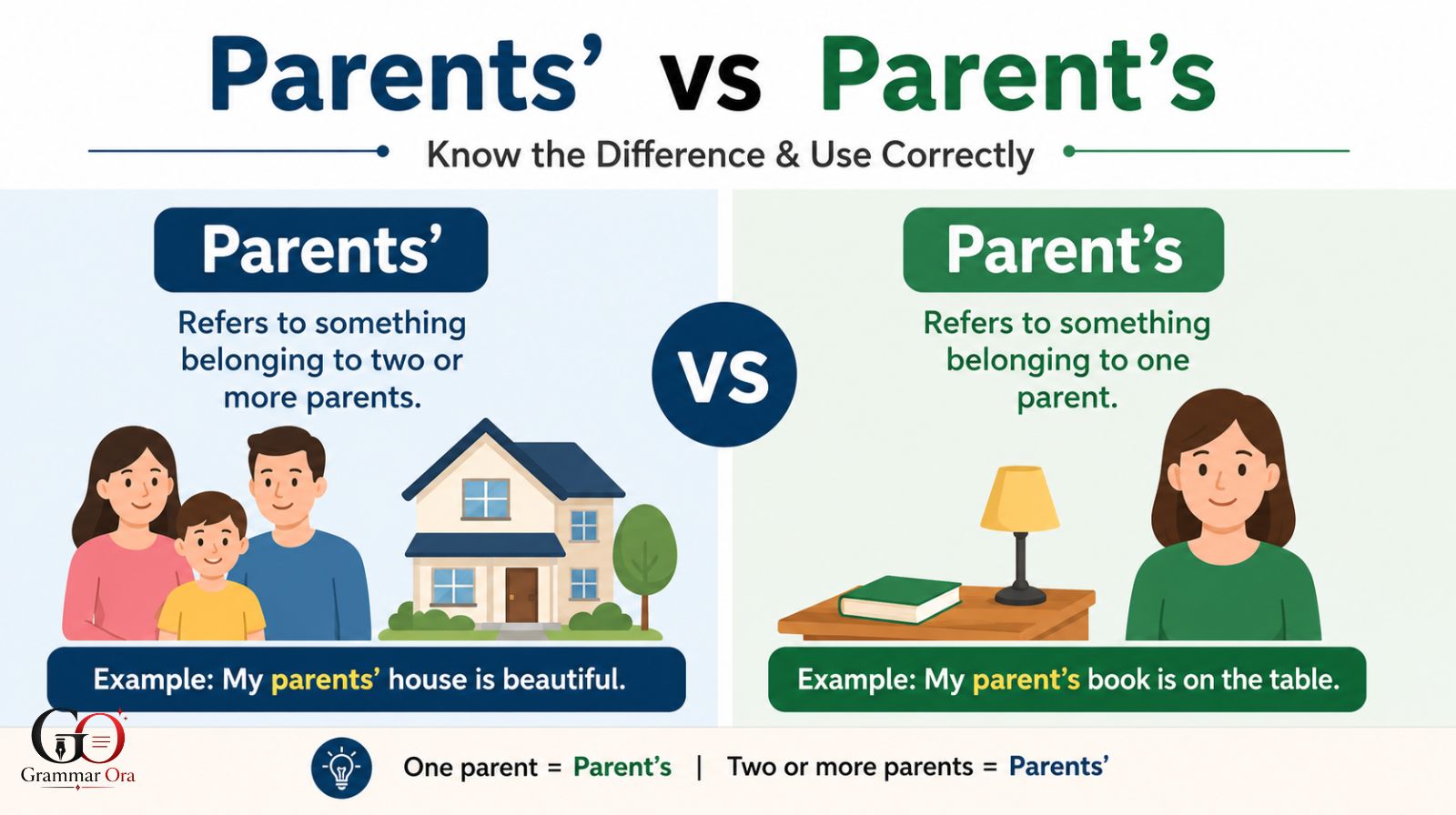
| Word | Meaning | Example |
|---|---|---|
| Parent’s | Something belongs to one parent | My parent’s advice helped me. |
| Parents’ | Something belongs to both parents or multiple parents | My parents’ house is beautiful. |
Remember This Simple Rule
- One parent = Parent’s
- Two or more parents = Parents’
This single rule solves almost every confusion.
What Does Parent’s Mean?
Parent’s is the singular possessive form of parent.
Use it when one parent owns, has, or is connected to something.
Examples
- My parent’s car is new.
- The parent’s signature is required.
- One parent’s opinion can influence a child.
- The parent’s responsibility is important.
Common Situations
You usually use parent’s when referring to:
- One mother or father
- A single guardian
- One person’s parental role
Why It Uses an Apostrophe Before the S
Since parent is singular, simply add ‘s.
Parent → Parent’s
What Does Parents’ Mean?
Parents’ is the plural possessive form.
It shows that something belongs to more than one parent.
Examples
- My parents’ bedroom is upstairs.
- The parents’ meeting starts at 6 PM.
- The parents’ concerns were discussed.
- The parents’ permission was required.
Why the Apostrophe Comes After the S
The word parents is already plural.
Instead of adding another s, place the apostrophe after the existing s.
Parents → Parents’
Parent’s vs Parents’: Side-by-Side Comparison
| Feature | Parent’s | Parents’ |
|---|---|---|
| Number | One parent | Two or more parents |
| Grammar | Singular possessive | Plural possessive |
| Apostrophe | Before s | After s |
| Example | Parent’s phone | Parents’ home |
Real-Life Example
Imagine Sarah is filling out forms for school.
Her mother signs the permission slip because her father is traveling.
In this situation, Sarah writes:
“My parent’s signature is attached.”
Only one parent signed the form, so parent’s is correct.
A month later, Sarah moves into a new family home purchased by both her mother and father.
Now she writes:
“My parents’ house has a large garden.”
Here, the house belongs to both parents, making parents’ the correct choice.
This simple change from one owner to multiple owners is exactly why apostrophe placement matters. Understanding ownership first makes choosing the correct form almost automatic.
Common Mistakes People Make
Using Parent’s for Two Parents
❌ My parent’s house is large.
✅ My parents’ house is large.
Forgetting the Apostrophe
❌ Parents meeting
✅ Parents’ meeting
Mixing Up Plural and Possessive
Remember:
- Parents = more than one parent
- Parents’ = something belongs to more than one parent
Easy Trick to Remember
Ask yourself one question:
How many parents own it?
If the answer is:
- One → Parent’s
- Two or more → Parents’
This works nearly every time.
Grammar Rule Explained
English possessive nouns follow consistent patterns.
Singular Noun
Add ‘s
- Teacher → Teacher’s
- Student → Student’s
- Parent → Parent’s
Plural Noun Ending in S
Add only an apostrophe.
- Teachers → Teachers’
- Students → Students’
- Parents → Parents’
2025–2026 Grammar Trends
Recent usage guidance from leading grammar references including educational publishers and style resources such as Grammarly, Purdue OWL, and the AP Stylebook continues to emphasize that apostrophe mistakes remain among the most frequently corrected writing errors in emails, academic work, and professional communication. As AI-assisted writing and digital publishing become more common in 2025–2026, accurate punctuation is increasingly important because readers quickly notice small grammar mistakes that can reduce credibility.
Quick Checklist
✔ One parent owns it → Parent’s
✔ Two or more parents own it → Parents’
✔ Ask who owns the object before writing.
✔ Check where the apostrophe belongs.
✔ Proofread before publishing.
FAQs
Q1: Is parent’s singular or plural?
A: Parent’s is singular possessive. It refers to something belonging to one parent.
Q2: What does parents’ mean?
A: It is the plural possessive form, showing ownership by two or more parents.
Q3: Is parents correct without an apostrophe?
A: Yes. Parents is simply the plural noun and does not show ownership.
Q4: Which is correct: parents’ meeting or parent’s meeting?
A: If the meeting is for many parents, parents’ meeting is correct.
Q5: How do I remember the difference?
A: Count the owners.
One owner = parent’s
More than one owner = parents’
Q6: Is parents’ house grammatically correct?
A: Yes. If both parents own the house, parents’ house is correct.
Q7: Why is the apostrophe after the S?
A: Because parents is already plural. You only add an apostrophe after the final s.
Conclusion
Understanding parents’ vs parent’s is much easier than it first appears. The only thing you need to remember is ownership. If one parent owns something, use parent’s. If two or more parents own it, use parents’. By applying this simple rule and checking how many owners there are, you’ll avoid one of the most common grammar mistakes and write with greater confidence and accuracy every time.
👉 Discover more simple and practical grammar guides on Grammar Ora

Muhammad Bilal is an expert blogger in Grammar Guide, dedicated to simplifying English grammar and helping learners write and speak with clarity, confidence, and accuracy.